 Pin it
 There's something about the smell of sautéed onions and celery that signals comfort is on the way. My neighbor actually introduced me to vegetarian chowder one rainy October afternoon when she showed up at my door with a steaming pot and no apologies for the intrusion. I was skeptical at first—chowder without bacon felt like a risk—but that first spoonful changed everything. The cauliflower had this subtle sweetness I'd never noticed before, the potatoes melted into the cream like they belonged there, and suddenly I understood why she made it twice a month.
I made this for my sister's book club once, thinking soup seemed like the easiest contribution. What I didn't expect was watching five people go quiet mid-conversation to focus entirely on their bowls. That's when I realized this chowder has a quiet power—it's unpretentious enough to serve casually, but silky and intentional enough to feel like you actually tried. She asked for the recipe that night, and now it shows up at her dinner table regularly.
Ingredients
- Cauliflower (1 medium head, florets): Cut these into small, bite-sized pieces so they cook evenly and actually blend if you choose to partially purée later—large chunks take forever and won't soften properly.
- Potatoes (2 medium, peeled and diced): Waxy potatoes like red or yellow hold their shape better than russets, which can turn into mush if you're not watching.
- Carrot and celery (1 large carrot, 1 stalk): These build the base flavor, so don't skip them even if you're in a hurry—dice them small so they cook in the same time as everything else.
- Onion and garlic (1 small onion, 2 cloves garlic): The aromatic backbone; mincing finely helps them dissolve into the broth rather than create separate chunks.
- Vegetable broth (3 cups): Good quality broth makes a real difference here since there's no meat to add depth—taste it first, and adjust salt accordingly.
- Whole milk or plant-based milk (1 cup): Add this near the end so it doesn't break or curdle; room temperature milk blends more smoothly than cold.
- Olive oil or unsalted butter (2 tbsp): Butter gives a richer mouthfeel, but olive oil works beautifully and keeps things vegan-friendly.
- All-purpose flour (2 tbsp): This thickens the chowder into silkiness; cook it with the oil for a minute or two before adding broth to remove the raw flour taste.
- Thyme, smoked paprika, white pepper, and salt: Smoked paprika adds a subtle depth that makes people ask what your secret ingredient is—it's these quiet seasonings, not loudness.
Tired of Takeout? 🥡
Get 10 meals you can make faster than delivery arrives. Seriously.
One email. No spam. Unsubscribe anytime.
Instructions
- Sauté the aromatic base:
- Warm your oil or butter over medium heat, then add the onion, carrot, and celery. You're listening for a gentle sizzle—this should take about 4 to 5 minutes, and you'll know it's ready when the onion turns translucent and the kitchen smells alive. Stir occasionally so nothing browns.
- Bloom the garlic:
- Add your minced garlic and let it cook for just one minute until it's fragrant but not browning, which would make it bitter.
- Cook the flour into a paste:
- Sprinkle the flour over the vegetables and stir constantly for about 2 minutes—this cooks out the raw taste and creates a roux that will thicken your chowder. You're essentially making a paste that'll grab the broth.
- Add the broth without lumps:
- Whisk gradually as you pour in the vegetable broth, making sure no flour clumps form—if lumps do appear, keep whisking or press them against the side of the pot with your spoon. Once it's smooth, add the potatoes and cauliflower.
- Simmer until vegetables are tender:
- Add your seasonings, bring to a boil, then lower the heat and let it simmer gently for about 20 minutes until the cauliflower and potatoes are completely soft and a fork slides through them easily. Taste it at the 15-minute mark to see how flavors are developing.
- Stir in the milk and finish cooking:
- Pour in your milk and simmer for another 5 minutes—this gentle time lets the flavors marry and prevents the milk from breaking.
- Blend for creaminess (optional):
- If you want a silkier texture, you can use an immersion blender right in the pot, working it through for about 30 seconds to break down some of the vegetables while keeping texture, or transfer 2 cups to a blender, purée it, and stir back in. Either way, you're going for creamy but not completely smooth.
- Taste and adjust:
- This is your moment—does it need more salt, more pepper, a whisper of nutmeg? Trust your palate.
- Serve with love:
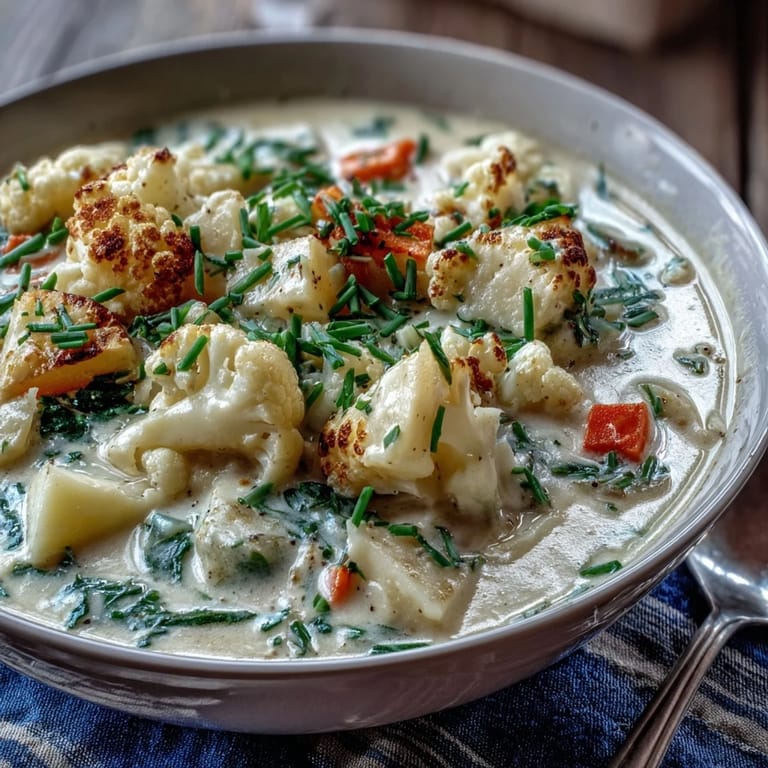
- Ladle into bowls and top with fresh chives, parsley, or cheese if you're using it, and crack fresh pepper over the top.
 Pin it
  Pin it
 My partner once told me this soup tasted like someone had distilled the feeling of being cared for into a bowl. That stuck with me because it's true—there's nothing showy about chowder, nothing that needs defending or explaining. It just exists as this warm, honest thing that shows up when you need it.
Making It Your Own
The beauty of this chowder is how forgiving it is to improvisation. I've added a splash of dry white wine right when I add the broth for subtle acidity, or a pinch of nutmeg that nobody can identify but somehow makes everything taste rounder. Some nights I add a heap of fresh spinach in the last minute and let it wilt into the cream, which adds color and nutrition without changing the fundamental character of the soup. You could roast your cauliflower first if you wanted something deeper and slightly caramelized, though that adds another step and honestly, the gentle approach works just as well.
Vegan and Dietary Variations
Keeping this vegetarian is the whole point, but taking it vegan requires just two swaps: use plant-based milk (oat milk has the most neutral flavor and creamiest texture here) and cook your vegetables in olive oil instead of butter. The soup loses nothing—it gains a lightness that some people prefer. For gluten-free, swap the all-purpose flour for cornstarch or a certified gluten-free blend, using the same amount and cooking it the same way. Friends with dietary restrictions always seem surprised when they taste it, as if chowder made to their needs shouldn't taste this good, but it does.
Serving and Storage
Serve this chowder hot in warmed bowls with crusty bread on the side—that bread is essential for soaking up every last spoonful. It keeps in the fridge for about 3 days in an airtight container, though the texture will soften slightly as it sits, which means it's actually better reheated gently on the stovetop with a splash of broth or milk to restore silkiness. Freezes beautifully for up to 2 months too, which makes it one of those meals worth doubling.
- Reheat gently on medium heat, stirring occasionally, rather than blasting it at high temperature.
- If it thickens too much after a day in the fridge, thin it with a little warm broth or milk when you heat it again.
- Freeze it before adding garnishes so you can customize each bowl when you're ready to eat.
 Pin it
  Pin it
 This soup has become my go-to when I want to feed people without performance, to show up with something warm and real. There's no pretense in a bowl of chowder, just generosity and intention.
Recipe FAQs
- → Can I make this chowder vegan?
Yes, simply substitute the whole milk with unsweetened plant-based milk such as almond, oat, or soy milk, and use vegan butter or olive oil instead of dairy butter.
- → How do I make this chowder gluten-free?
Use certified gluten-free all-purpose flour or a gluten-free flour blend in place of regular wheat flour for the roux. The rest of the ingredients are naturally gluten-free.
- → Can I blend the entire chowder for a smooth texture?
You can, but partially blending preserves some texture and keeps hearty vegetable pieces intact. Blend half the pot or use an immersion blender briefly for a creamy-chunky consistency.
- → What can I serve with cauliflower chowder?
This chowder pairs beautifully with crusty sourdough bread, garlic toast, or a simple green salad. For heartier meals, serve alongside grilled cheese sandwiches.
- → How should I store leftover chowder?
Store cooled chowder in an airtight container in the refrigerator for up to 3 days. Reheat gently on the stovetop, adding a splash of broth or milk if it thickens too much.
- → Can I add other vegetables to this chowder?
Absolutely. Corn, peas, diced bell peppers, or chopped kale work well. Add heartier vegetables like corn or bell peppers with the potatoes, and stir in greens near the end of cooking.