 Pin it
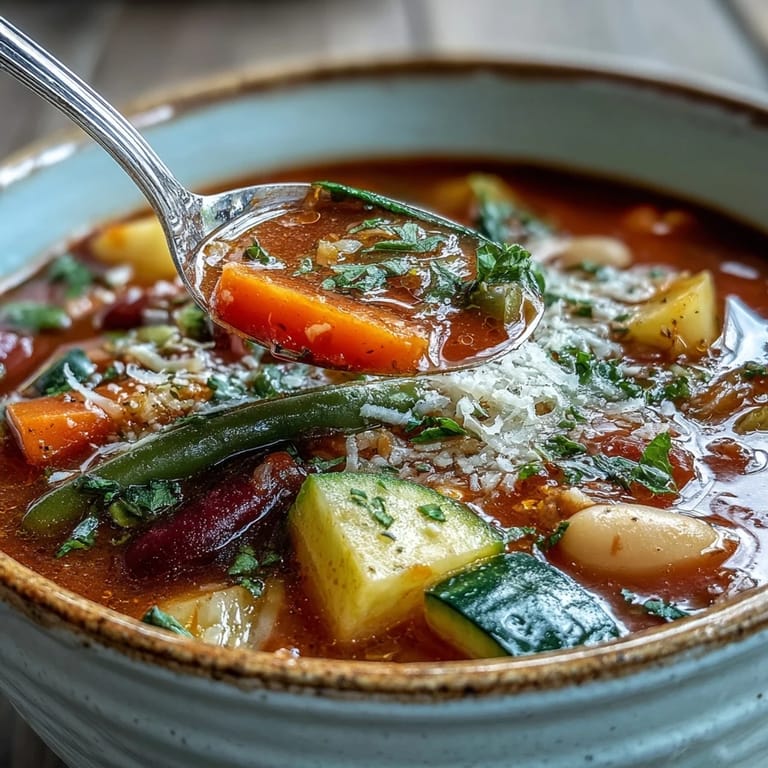
 My neighbor Maria showed up at my door one October evening with a pot of minestrone, steam rising from under the lid, and suddenly the entire hallway smelled like Italy. She insisted I learn to make it because, as she said, every home cook needs one soup that feels like a warm hug. That bowl changed how I thought about simple, honest cooking.
Years later, I made this soup for my daughter's first day of high school when she came home nervous and exhausted. She sat at the kitchen counter in her new uniform, and halfway through that bowl, her shoulders relaxed and she started telling me about her classes. That's when I realized minestrone isn't really about the vegetables at all.
Ingredients
- Olive oil (2 tablespoons): This is your foundation, so use something you actually enjoy tasting rather than the cheapest bottle on the shelf.
- Yellow onion, carrots, and celery (1 onion, 2 carrots, 2 stalks): These three are the holy trinity that builds flavor from the very first minute the oil hits the pan.
- Garlic (2 cloves, minced): Add it after the softer vegetables have started breaking down so it doesn't burn and turn bitter.
- Zucchini and potato (1 medium each, diced): The zucchini keeps things light while the potato adds substance and helps thicken the broth naturally.
- Green beans (1 cup, chopped): These stay bright and slightly firm even after simmering, which is why they matter textually.
- Diced tomatoes (1 can, 400 g): Canned tomatoes are honestly better here than fresh because they've already been cooked down and concentrated.
- Cannellini beans (1 can, drained and rinsed): Rinsing them removes the starchy liquid that can make your soup cloudy.
- Small pasta, such as ditalini (1 cup): Use something tiny because big pasta gets overwhelming in a spoon of soup.
- Vegetable broth (1.5 liters): The quality matters here since it's carrying so much of the flavor, so taste it first if you're using store-bought.
- Dried Italian herbs (2 teaspoons): Don't skip these even though you might think fresh herbs are always better because the slow simmer brings out dried herbs differently.
- Bay leaf (1): This goes in to whisper things to the broth, but you absolutely must fish it out before serving.
- Spinach or kale (2 cups): The spinach wilts into nothing almost instantly while kale stays a bit more assertive if you prefer texture.
- Fresh parsley (2 tablespoons, chopped): Add this at the very end so it stays bright green and herbaceous rather than turning dark.
- Parmesan cheese, freshly grated (optional): If you use it, grate it yourself because the pre-grated stuff has additives that prevent clumping and prevent flavor.
Tired of Takeout? 🥡
Get 10 meals you can make faster than delivery arrives. Seriously.
One email. No spam. Unsubscribe anytime.
Instructions
- Build your flavor base:
- Heat the olive oil in a large pot over medium heat and add the onion, carrots, and celery. You're looking for them to soften and turn slightly golden around the edges, which takes about 5 minutes and smells absolutely incredible.
- Layer in the heartier vegetables:
- Stir in the garlic, zucchini, potato, and green beans and cook for 3 more minutes until everything releases its first wave of fragrance. The pot should smell so good that you pause and just breathe it in.
- Pour in the liquid and seasonings:
- Add the diced tomatoes, cannellini beans, vegetable broth, dried herbs, and bay leaf, then bring the whole thing to a rolling boil. Once it's boiling, immediately turn the heat down and let it simmer gently with the lid on for 20 minutes.
- Introduce the pasta:
- Stir in your small pasta and simmer uncovered for 8 to 10 minutes, stirring occasionally so nothing sticks to the bottom. The pasta will absorb broth as it cooks and release its starch, which is actually what helps make the soup feel more substantial.
- Finish with greens and seasoning:
- Fish out the bay leaf, add your spinach or kale, and let it cook just until wilted, about 2 minutes. Taste the soup now and add salt and pepper slowly, tasting between each addition because canned broth is already salted.
 Pin it
  Pin it
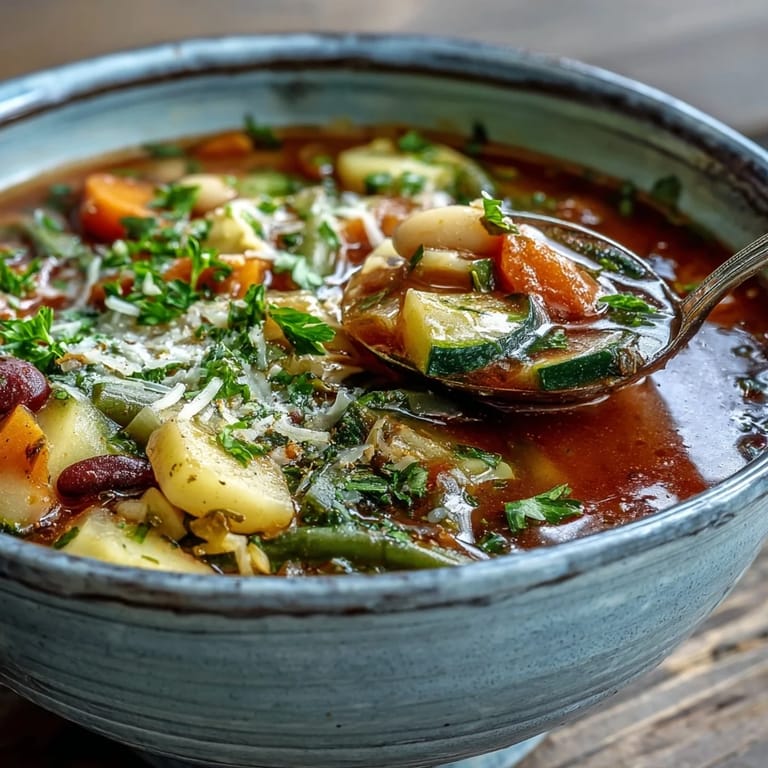
 There's this quiet moment in cooking minestrone when everything simmers and the kitchen fills with steam, and you know the hard work is done. You can just watch it bubble, smell it transforming, and feel like you've accomplished something real.
Why This Soup Happens to Be Perfect
Minestrone exists somewhere between a vegetable showcase and a comfort meal, which is why it works for people who are tired and people who are celebrating and people who are just standing in front of the fridge trying to figure out what's for dinner. It's humble but never boring, substantial but never heavy, and it genuinely tastes better when it has time to sit in the refrigerator overnight.
Making It Your Own
The beauty of this soup is that it's a framework, not a rule book. I've made it with cabbage instead of zucchini, added white beans when I was out of cannellini, thrown in fresh basil at the end instead of dried herbs. One friend swears by adding a Parmesan rind while it simmers because it dissolves slightly and adds a savory depth that feels almost mysterious.
Serving and Storing Your Minestrone
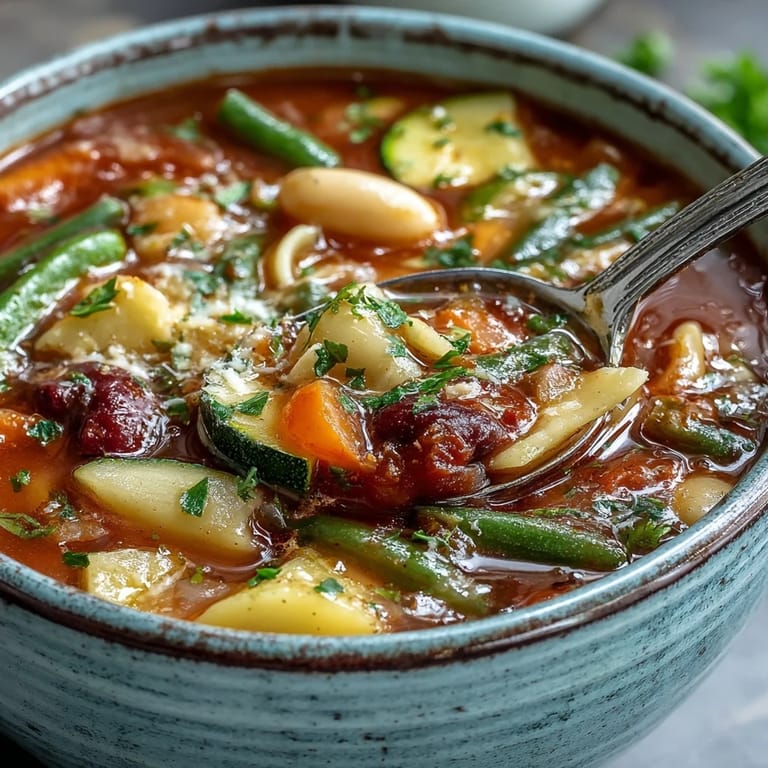
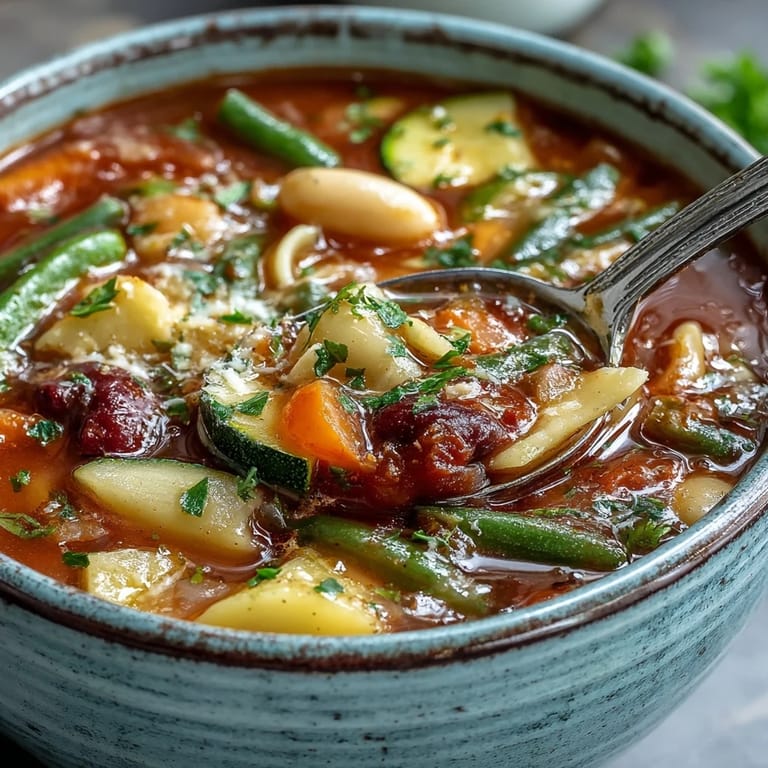
This soup gets better with time, which is the best kind of recipe because it rewards you for making it ahead. Ladle it into deep bowls, top with fresh parsley, and let everyone add their own Parmesan cheese at the table because not everyone wants it and that's perfectly fine. This soup freezes beautifully for up to 3 months, though it's usually gone long before then.
- Reheat it gently on the stovetop rather than the microwave so it warms evenly and doesn't develop hot spots that burst the vegetables.
- If the soup gets thick after sitting, just stir in a splash of broth or water when you reheat it.
- Serve it with crusty bread and maybe a glass of red wine if the evening calls for it.
 Pin it
  Pin it
 This is the kind of recipe that becomes part of your cooking identity once you make it a few times. It asks nothing fancy of you but gives back something warm and nourishing every single time.
Recipe FAQs
- → Can I make minestrone soup ahead of time?
Yes, minestrone soup stores well in the refrigerator for up to 4 days. Note that the pasta will absorb liquid over time, so you may need to add extra broth when reheating. For best results, cook the pasta separately and add it when serving.
- → What vegetables can I substitute in minestrone?
Minestrone is highly versatile. You can add or substitute seasonal vegetables like cabbage, peas, bell peppers, or butternut squash. Just maintain similar cooking times by adding harder vegetables earlier and leafy greens at the end.
- → How do I make this soup gluten-free?
Simply replace regular pasta with your favorite gluten-free pasta variety. Ensure your vegetable broth is certified gluten-free, and always check canned goods labels for any hidden gluten-containing ingredients.
- → Can I freeze minestrone soup?
Yes, but it's best to freeze it without the pasta, as pasta can become mushy when frozen and reheated. Add freshly cooked pasta when you reheat the soup. Freeze in airtight containers for up to 3 months.
- → What makes minestrone different from other vegetable soups?
Minestrone is distinguished by its Italian heritage, combining beans, pasta, and a variety of vegetables in a tomato-based broth seasoned with Italian herbs. The combination of pasta and beans provides heartiness that makes it a complete meal.
- → How can I add more protein to this soup?
Add extra beans such as kidney or chickpeas, include more cannellini beans, or stir in cooked white beans. For non-vegetarian versions, you can add cooked Italian sausage or pancetta at the beginning when sautéing vegetables.