 Pin it
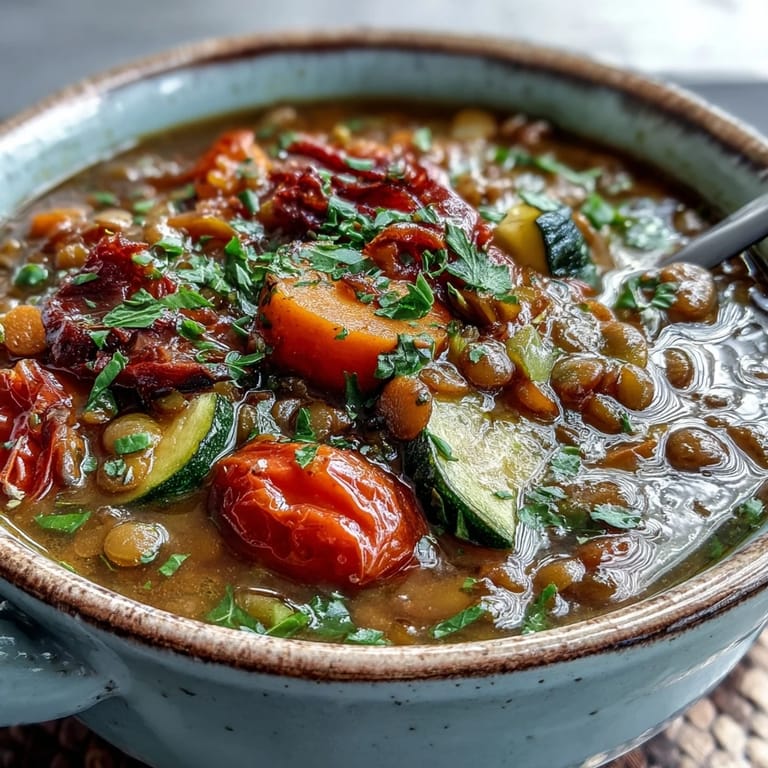
 There's something about the smell of vegetables roasting in the oven that makes me stop whatever I'm doing and just breathe it in. I discovered this lentil soup on a chilly Tuesday when I had half a zucchini, some carrots getting soft in the crisper drawer, and a handful of cherry tomatoes I wanted to use before they went bad. What started as an attempt to clear out my vegetable drawer turned into one of those soups that tastes like it took hours, even though it honestly didn't. The roasting step—that's the real magic, the part that changed everything.
I made this for my neighbor Sarah on a day when she mentioned feeling under the weather, and watching her face light up when she tasted it made me realize this wasn't just soup—it was the kind of thing people remember. She asked for the recipe that same evening, and I loved explaining the roasting part because I got to watch her understand why it mattered. That's when I knew I had to write it down properly, not just wing it anymore.
Ingredients
- Dried green or brown lentils (1 cup): Green lentils hold their shape better than red ones, which is exactly what you want here—they stay whole and toothsome instead of turning mushy. Rinsing them matters more than you'd think; it removes dust and makes the final soup cleaner tasting.
- Carrots and celery (2 medium and 2 stalks): These are your flavor foundation, the aromatic base that makes everything taste intentional and deep. Dicing them roughly the same size means they cook evenly and look good in the bowl.
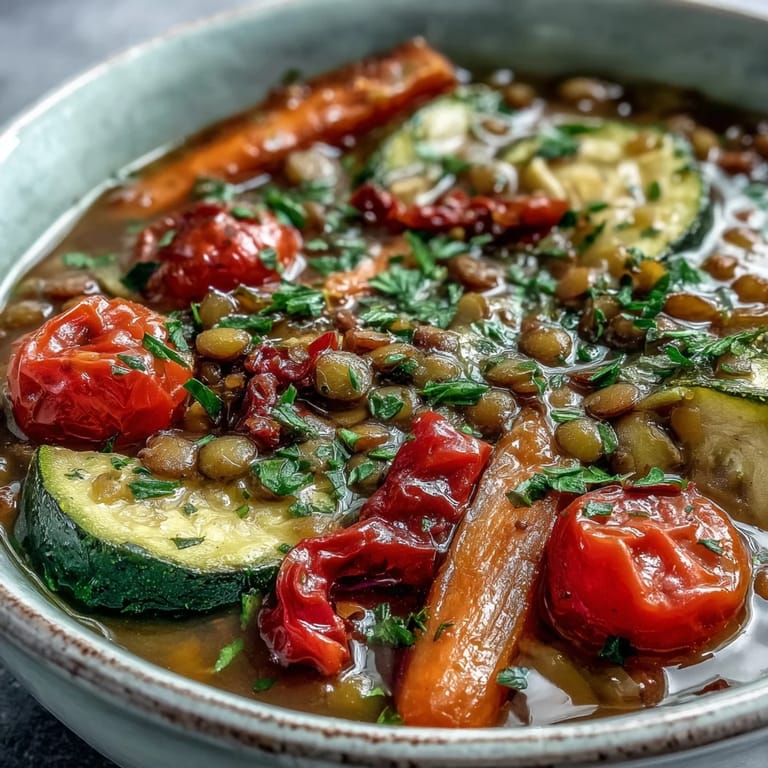
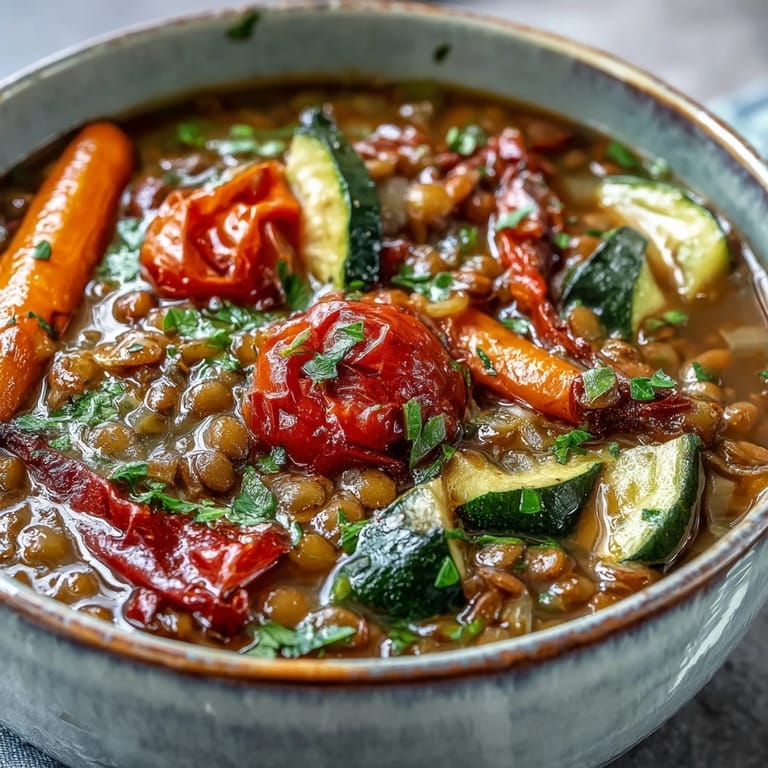
- Zucchini, red bell pepper, and cherry tomatoes: These go straight into the oven for roasting, where they develop sweetness and a subtle char that raw vegetables could never give you. The cherry tomatoes halve beautifully and burst into the broth as you eat.
- Yellow onion and garlic (1 medium and 3 cloves): Sautéing these first builds the base layer of flavor that everything else sits on top of. Garlic burned is bitter, so add it after the onion softens and give it just one minute.
- Vegetable broth (6 cups): This is where the soup lives or dies, so use broth you'd actually drink on its own if you had to. If yours is bland, the soup will be too.
- Dried thyme, oregano, and smoked paprika: The paprika gives warmth and color without heat, while the herbs keep things from tasting one-note. Don't skip the smoked version—it changes the entire personality of the dish.
- Olive oil (2 tablespoons total): One tablespoon roasts the vegetables into something golden, and the other starts your aromatics on the stovetop. Good olive oil here matters, even if you don't use it everywhere else.
- Bay leaf, salt, pepper, and lemon juice: The bay leaf simmers with everything but gets removed before serving—it's a small thing that prevents the soup from tasting flat. Lemon juice at the end is optional but transforms the whole thing, so consider it mandatory.
- Fresh parsley: Sprinkled on top at the end, it adds color and brightness that reminds you this is alive and fresh, not something that's been sitting around.
Tired of Takeout? 🥡
Get 10 meals you can make faster than delivery arrives. Seriously.
One email. No spam. Unsubscribe anytime.
Instructions
- Heat your oven and prep the vegetables for roasting:
- Set your oven to 425°F and get it actually hot while you cut everything. Toss the carrots, celery, zucchini, bell pepper, and cherry tomatoes with 1 tablespoon of olive oil, a pinch of salt, and pepper, then spread them in one layer on a baking sheet—if they're crowded, they steam instead of roast.
- Get those vegetables into the oven:
- Put the pan in and set a timer for 20 minutes. You'll know they're ready when the edges turn slightly caramelized and the cherry tomatoes start to collapse, which is exactly when they taste best.
- Build your base while vegetables roast:
- Heat the remaining 1 tablespoon of oil in a large pot over medium heat and add your chopped onion. Stir it around for about 4 minutes until it softens and turns a little translucent, then add your minced garlic and cook for just 1 minute—any longer and it turns bitter.
- Combine everything and simmer:
- Pour in the rinsed lentils, add the roasted vegetables from the oven (they'll be warm and smell incredible), then pour in all 6 cups of broth. Add the thyme, oregano, smoked paprika, and bay leaf, then bring it to a boil before turning the heat down to a gentle simmer.
- Let time do its work:
- Simmer uncovered for about 25 minutes, until the lentils are tender but not falling apart. You can tell they're done when you can easily squish one between your tongue and the roof of your mouth.
- Finish and taste:
- Fish out the bay leaf, then taste the soup and decide what it needs—more salt, pepper, or a squeeze of fresh lemon juice. The lemon is subtle but makes the whole thing taste bright and intentional.
- Serve it properly:
- Ladle into bowls and top with fresh parsley if you have it. A crack of black pepper and maybe a drizzle of good olive oil if you're feeling it.
 Pin it
  Pin it
 My mom tasted this one evening and asked if I'd gone to culinary school, which made me laugh because I'd actually made it three times before getting it right. She sat at the counter with her bowl and didn't say much, just kept eating, and that quiet contentment told me more than any compliment could have. That's when I understood that good food doesn't need fanfare—it just needs to nourish someone exactly when they need it.
Why Roasting Changes Everything
Raw vegetables have their place, but when you roast them at high heat, something happens—the natural sugars caramelize, the edges turn golden and crispy, and the flavors concentrate into something deeper and sweeter. Those 20 minutes in the oven aren't optional; they're the difference between a good soup and one you'll actually crave on a cold day. I learned this by accident the first time I made this, forgetting to turn on the oven and just dumping raw vegetables into the pot, and the difference was so stark that I've never made that mistake again.
The Art of Layering Flavor
This soup works because you're not just throwing ingredients together—you're building flavor in stages. The onion and garlic create a savory base, the broth becomes the canvas, the lentils add earthiness and protein, and the roasted vegetables bring sweetness and char. Each element matters, and the smoked paprika is your secret weapon, the ingredient that makes people ask what they're tasting because it adds complexity without being obvious about it. It's the difference between a bowl of soup and something you'll think about later.
Variations and Substitutions That Work
This recipe is forgiving and adaptable, which is part of why it became my go-to weeknight dinner. If you don't have zucchini, roast sweet potato or butternut squash instead—they caramelize beautifully and add a different kind of sweetness. Bell pepper can be swapped for any roasting vegetable you have on hand, and if you want to add richness, stir in a tablespoon of tomato paste while you're sautéing the onion. Some people add a splash of red wine vinegar or balsamic at the end, and honestly, I've done that on nights when the soup needed something and it worked every time.
- Tomato paste stirred in during the onion step adds depth and umami without tasting like tomato, especially if your broth is mild.
- A handful of fresh spinach or kale at the end wilts right in and nobody needs to know you snuck greens into dinner.
- Serve with crusty bread and it transforms from a side into a full meal that satisfies both your stomach and your soul.
 Pin it
  Pin it
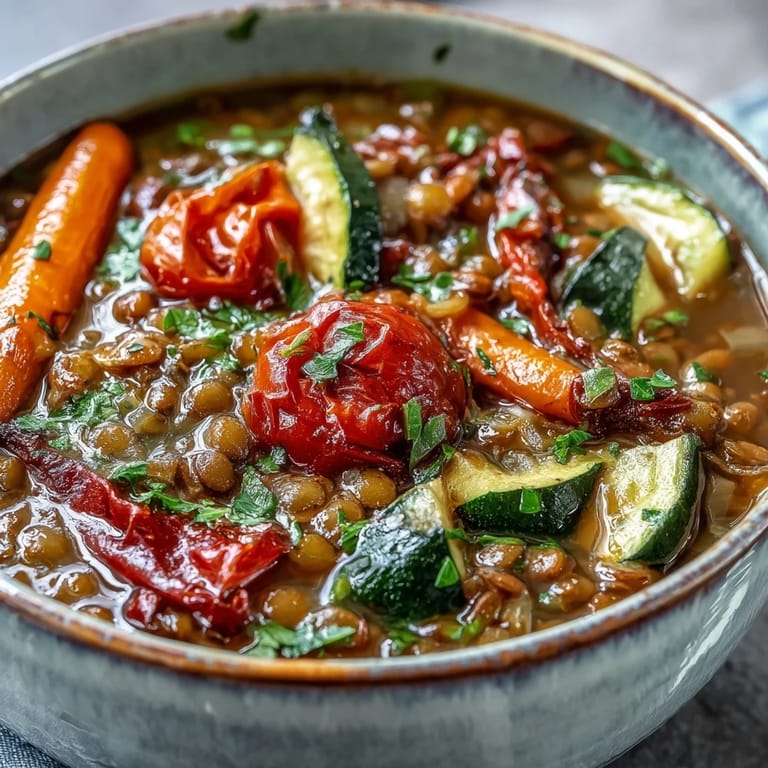
 This soup has become my comfort food, the thing I make when I want to feel like I'm taking care of myself or when someone I love needs nourishing. It's simple enough to come together on a regular Tuesday but special enough to feel like you actually tried.
Recipe FAQs
- → Can I use red lentils instead of green or brown?
Red lentils cook faster and break down more, creating a thicker, creamier texture. If using red lentils, reduce cooking time to 15-20 minutes and expect a less chunky consistency.
- → How do I store leftover lentil soup?
Store cooled soup in an airtight container in the refrigerator for up to 5 days. The soup may thicken when refrigerated; add a splash of broth or water when reheating to restore desired consistency.
- → Can I make this soup in a slow cooker?
Yes, after roasting the vegetables and sautéing the onion and garlic, transfer everything to a slow cooker with remaining ingredients. Cook on low for 6-7 hours or high for 3-4 hours until lentils are tender.
- → What vegetables can I substitute or add?
Sweet potato, butternut squash, kale, spinach, or green beans all work beautifully. Add hearty vegetables at the beginning with lentils, and stir in leafy greens during the last 5 minutes of cooking.
- → Why roast the vegetables before adding them?
Roasting caramelizes the vegetables, developing deeper, sweeter flavors and adding complexity to the soup. This step enhances the overall taste, though you can skip it if short on time.
- → Can I freeze this soup?
Absolutely. Cool completely, then freeze in portion-sized containers for up to 3 months. Thaw overnight in the refrigerator and reheat gently on the stovetop, adding liquid if needed.