 Pin it
 There's something almost magical about the moment when raw tomatoes transform in a hot oven—the kitchen fills with this concentrated, caramelized sweetness that smells nothing like fresh tomatoes and everything like comfort. I discovered this soup by accident one autumn when I had a glut of tomatoes that were past their prime for eating raw, and I was too stubborn to let them go to waste. That first batch was revelatory: simple roasting brought out flavors I didn't know were hiding, and suddenly I understood why this became a seasonal ritual for so many home cooks.
I made this for my neighbor one chilly evening after she'd had a rough day, and I watched her face light up when she tasted it—not because it was fancy, but because it was warm and genuine and exactly what she needed. She asked for the recipe three times over dinner, and now she texts me photos of her own versions. That's when I realized this soup does something beyond nourishment; it becomes a small act of kindness that people want to pass forward.
Ingredients
- Ripe tomatoes (1.5 kg): Choose tomatoes at peak ripeness or even slightly overripe; they caramelize better and deliver more concentrated flavor when roasted, and the slight imperfections won't matter once they're broken down.
- Onion and garlic: These soften completely during roasting and add natural sweetness and depth that balances the tomato acidity without needing a ton of added sugar.
- Olive oil (2 tbsp for roasting): Don't skimp here—it helps the vegetables caramelize evenly and carries the roasted flavors throughout the soup.
- Thyme: Fresh is lovely, but dried thyme actually intensifies during roasting and distributes more evenly than fresh herbs might.
- Vegetable broth (500 ml): Use good quality broth; it's one of the few ingredients you taste directly, and a flavorful broth makes a noticeable difference.
- Tomato paste: This adds umami depth and helps balance the acidity of the tomatoes, making the overall flavor rounder and more complex.
- Sugar (optional): A teaspoon adjusts the brightness if your tomatoes lean tart, but taste first before adding it.
- Heavy cream or coconut cream (optional): A splash transforms the texture into something silky; it's not necessary but elevates the experience significantly.
- Day-old bread for croutons: Older bread absorbs oil better and crisps up more effectively than fresh bread, which tends to get soggy in the center.
Tired of Takeout? 🥡
Get 10 meals you can make faster than delivery arrives. Seriously.
One email. No spam. Unsubscribe anytime.
Instructions
- Get your oven ready and prepare the vegetables:
- Preheat to 200°C and arrange your halved tomatoes cut-side up on a baking tray alongside onion quarters and garlic cloves. Drizzle everything with olive oil, then sprinkle salt, pepper, and thyme over the lot—you'll want them all touching the pan so they can caramelize where they make contact.
- Roast until everything turns golden and soft:
- Let this go for 30-35 minutes; you're looking for the tomatoes to collapse slightly and develop dark, caramelized spots on the edges, while the onions soften into almost translucent pieces. The garlic should be completely tender and slightly browned.
- Toast the croutons while vegetables roast:
- Toss your bread cubes with olive oil, garlic powder, salt, and pepper, spread them on a separate sheet, and bake for 10-15 minutes until golden and crispy, stirring once halfway through. They'll continue crisping as they cool, so pull them out when they still look slightly underdone.
- Build the soup base:
- Transfer the roasted vegetables into a large saucepan with the vegetable broth, tomato paste, and sugar if you're using it. Bring to a gentle simmer and let it bubble away for about 10 minutes so the flavors can marry together.
- Blend until silky smooth:
- Using an immersion blender, puree everything until you reach your preferred consistency—I like mine completely smooth, but some people enjoy a few tender bits. If the soup seems too thick, add a splash more broth; if it's too thin, let it simmer a bit longer to reduce.
- Finish with cream and final seasoning:
- Stir in cream if using and taste carefully before adjusting salt or pepper—you might need less salt than you expect since the broth and tomato paste are already seasoned. A small pinch of sugar can brighten things if the soup tastes flat.
- Serve with warm croutons:
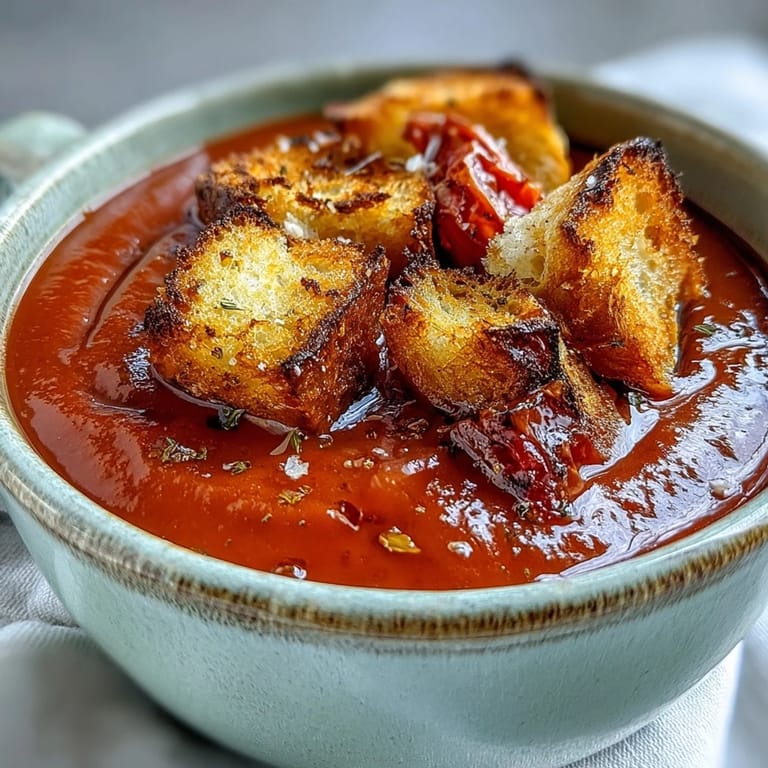
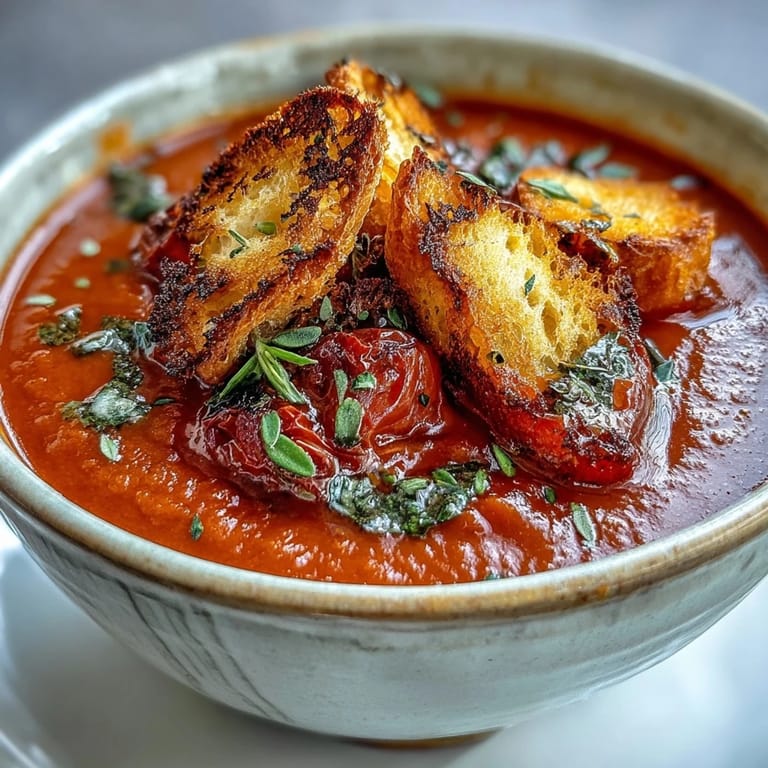
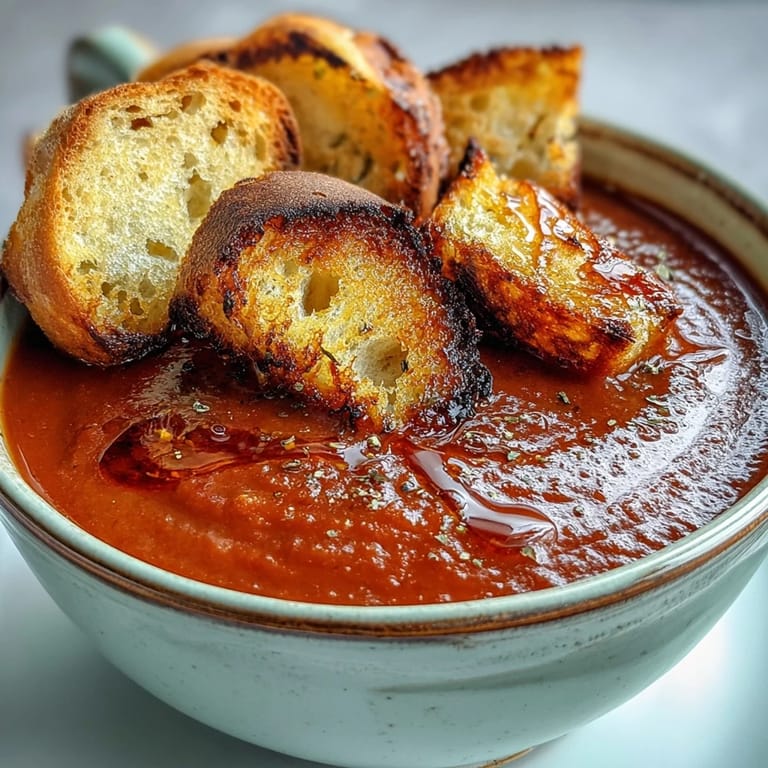
- Ladle hot soup into bowls and crown each one with a generous handful of crispy croutons just before serving, so they stay crunchy instead of softening into the soup.
 Pin it
 I think about the small moments that make cooking worth doing: the sound of croutons crunching as someone takes their first spoonful, the steam rising in their face, the quiet satisfaction of a simple thing made well. This soup is one of those dishes that reminds me why home cooking matters.
Variations to Keep It Interesting
Once you master the basic recipe, you can twist it in directions that suit your mood or pantry. A splash of balsamic vinegar during the simmer adds wine-dark complexity, while smoked paprika brings a gentle campfire warmth that works especially well in autumn. Some mornings I add a handful of fresh basil right at the end, letting it wilt into the hot soup just enough to release its brightness without cooking away its personality.
Making It Work for Different Diets
This soup is naturally vegetarian and easily becomes vegan if you swap coconut cream for dairy cream, which actually adds a subtle tropical note that pairs beautifully with roasted tomatoes. For a gluten-free version, simply use gluten-free bread for your croutons—the soup itself needs no modification whatsoever. I've also made it for friends avoiding cream entirely, and honestly, the roasted tomato flavor is compelling enough on its own that the soup doesn't feel like it's missing anything.
Storage and Make-Ahead Tips
The soup keeps beautifully in the refrigerator for up to four days and actually tastes better the next day once flavors have settled and deepened. You can freeze it in portions for up to three months, though I usually freeze without the cream and add that fresh when reheating. Make your croutons fresh or store them in an airtight container for a couple of days, but assemble the bowls just before serving so they stay crispy.
- Freeze the soup in ice cube trays for convenient single-serving portions that thaw quickly on busy weeknights.
- Toast extra croutons and store them separately so you always have them on hand for impromptu soup moments.
- If reheating from frozen, do it gently on the stovetop rather than the microwave to preserve the creamy texture.
 Pin it
 This is the soup I make when I want to feel capable in the kitchen without needing to prove anything to anyone. It's honest, it's warm, and it reminds me every single time why simple cooking is sometimes the most satisfying kind.
Recipe FAQs
- → How do I get the best flavor from roasted tomatoes?
Roasting tomatoes at high temperature (200°C/400°F) for 30-35 minutes concentrates their natural sugars and creates caramelized edges, resulting in deeper, sweeter flavor than raw or simmered tomatoes.
- → Can I make this ahead of time?
Absolutely. The soup actually tastes better the next day as flavors meld. Store in the refrigerator for up to 4 days. Reheat gently and add fresh croutons before serving.
- → What type of bread works best for croutons?
Day-old bread with sturdy texture works ideally—sourdough, ciabatta, or rustic country bread hold up well during baking and stay crispy longer than soft sandwich bread.
- → How can I make this vegan?
Simply use coconut cream or your favorite plant-based cream alternative instead of heavy cream. The result remains velvety and delicious while being completely dairy-free.
- → Can I freeze this soup?
Yes, freeze the soup without cream for up to 3 months. Thaw overnight in the refrigerator, reheat, and stir in cream when ready to serve. Croutons are best made fresh.
- → What adds extra depth to the flavor?
A pinch of smoked paprika during simmering adds subtle smokiness, while a splash of balsamic vinegar enhances the tomatoes' natural sweetness and balances acidity beautifully.