 Pin it
 There's something about the smell of sautéed onions and garlic that stops me mid-afternoon, pulling me into the kitchen whether I planned to cook or not. My neighbor Maria taught me her version of minestrone one cold November, and what struck me wasn't just how simple it was, but how it tasted like every season at once—fresh beans, tender pasta, vegetables at their peak. She stirred the pot with one hand while gesturing dramatically with the other, explaining that good minestrone isn't about perfection; it's about what you have and what feels right that day.
I made this soup for my sister the week she moved into her first apartment, carrying it over in a mason jar still hot from the stove. She reheated it while unpacking boxes, and I remember her calling me later saying it was the first meal that actually felt like home in that new place. That's when I understood minestrone isn't just food—it's a gesture, a way of saying someone matters to you.
Ingredients
- Olive oil: Use good quality, extra-virgin oil—it's the foundation of flavor and worth the splurge here since it's tasted raw in the broth.
- Onion, garlic, carrots, and celery: This is your aromatic base, the soffritto that builds everything else; don't rush the sauté.
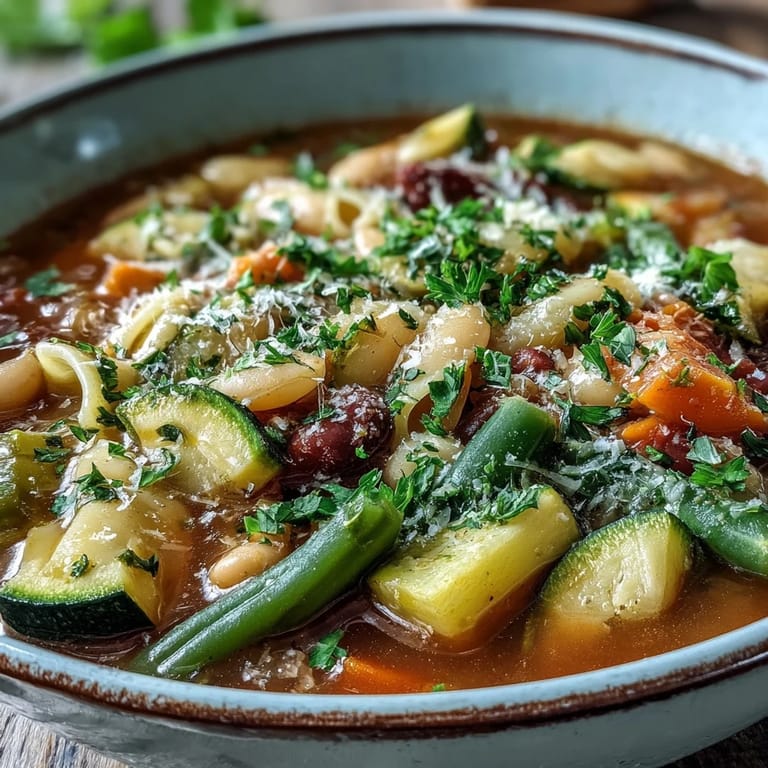
- Zucchini, potato, and green beans: Layer vegetables of different textures so you get tender bites and slight firmness throughout.
- Diced tomatoes with juices: Canned tomatoes are actually more reliable here than fresh; they've been picked at peak ripeness and concentrated with flavor.
- Vegetable broth and water: The broth carries depth, while water keeps it from becoming too heavy or one-dimensional.
- Cannellini beans: Rinse them thoroughly under cool water to remove excess starch, which keeps the broth clear and silky instead of cloudy.
- Small pasta: Ditalini or elbow macaroni work best because they cook quickly and nestle into spoons without dominating each bite.
- Dried oregano and basil: These add backbone; the dried herbs intensify during simmering, so you need less than you'd think.
- Bay leaf: Fish this out before serving—someone's tongue finding it will never forget the bitterness.
- Fresh parsley and basil: Stir these in at the end to preserve their bright, alive quality that cooking destroys.
- Parmesan cheese: A small pile on top adds salt, umami, and a slight richness that transforms each spoonful.
Tired of Takeout? 🥡
Get 10 meals you can make faster than delivery arrives. Seriously.
One email. No spam. Unsubscribe anytime.
Instructions
- Start with the soffritto:
- Heat olive oil in your pot over medium heat until it shimmers—you'll see it move like liquid silk. Add chopped onion and garlic, listening for that gentle sizzle that tells you the temperature is just right, then stir every thirty seconds or so until the onion turns translucent and the kitchen fills with that irresistible aroma.
- Build the vegetable foundation:
- Add carrots, celery, zucchini, potato, and green beans, stirring occasionally for five or six minutes until they soften slightly at the edges. You're not cooking them all the way—just creating a tender base that will release flavor into the broth.
- Add the liquid and seasonings:
- Pour in the tomatoes with their juice, then the broth and water, scraping the pot bottom gently with your spoon to catch any caramelized bits. Sprinkle in oregano, basil, bay leaf, salt, and pepper, then watch as the mixture comes to a rolling boil—this is the moment the ingredients begin speaking to each other.
- Simmer gently:
- Lower the heat to medium-low, cover the pot with a lid, and let it bubble softly for fifteen minutes. The steam rises, the vegetables soften further, and the flavors meld into something larger than their individual parts.
- Finish with beans and pasta:
- Drain and rinse the cannellini beans, then add them along with the pasta, stirring well so the pasta doesn't clump. Leave the pot uncovered now, letting it simmer for another ten to twelve minutes while you watch the pasta turn tender and the broth thicken slightly from the starch it releases.
- Season and garnish:
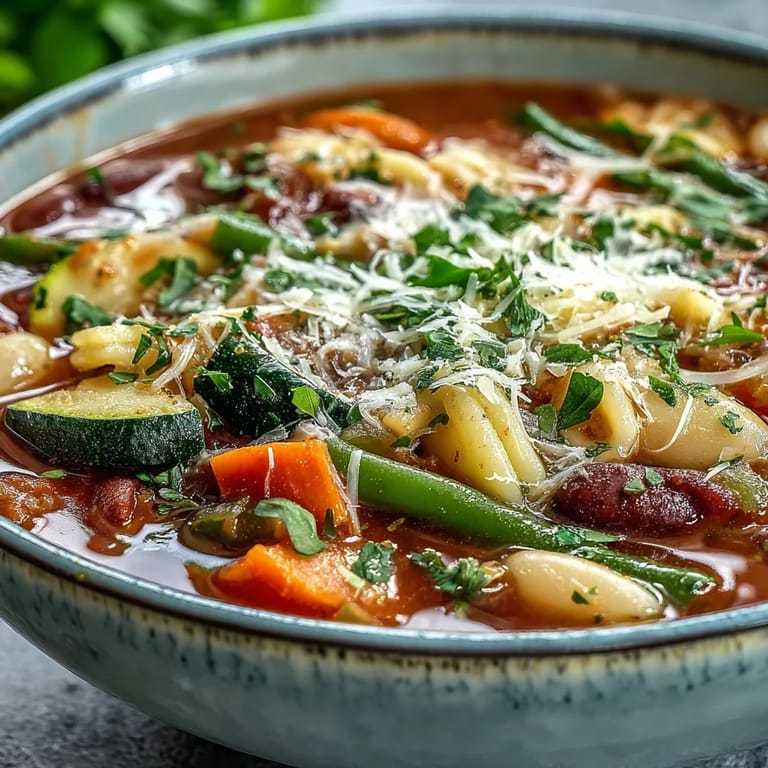
- Fish out that bay leaf, then taste the soup and adjust salt and pepper as needed—remember, you'll add Parmesan later, so don't oversalt now. Stir in the fresh parsley and basil, which will release their fragrance immediately, then ladle into bowls and top with a small handful of grated Parmesan.
 Pin it
 My daughter now requests this soup on rainy Sundays, and I've watched her taste it differently each time, noticing new things—the slight sweetness of the zucchini, the way the pasta catches the tomato flavor. It's become our quiet conversation starter, the thing we make together when we need time that feels unhurried and full of small purpose.
Seasoning and Flavor Balance
Minestrone's character lives in its herbs and spices, which build gradually rather than hit all at once. The dried oregano and basil work as a quiet backdrop during the simmer, becoming more concentrated as the liquid reduces slightly. Fresh herbs stirred in at the end provide a bright contrast, almost a cleansing note that prevents the soup from feeling heavy, and that final scatter of Parmesan adds a savory depth that ties everything together.
Vegetable Variations Through the Seasons
The beauty of minestrone is that it adapts without losing its soul. Summer calls for zucchini and green beans, while autumn welcomes chopped kale or spinach stirred in near the end, their earthiness warming against the tomato base. Winter is perfect for cabbage or butternut squash diced small, and spring opens the door for fresh peas or thinly sliced asparagus. Each season creates a different experience while keeping the underlying comfort intact.
Making It Your Own
Some mornings I add a handful of ditalini cooked separately and fold it in at the last minute, which keeps the pasta from absorbing all the broth. Other times, when I'm feeling generous or feeding more people, I'll toss in white beans instead of cannellini, or add both. The soup rewards improvisation and personal touches, becoming richer each time you make it.
- For a vegan version, simply skip the Parmesan or use a plant-based alternative that melts pleasantly over the hot soup.
- A thin drizzle of good olive oil just before serving adds richness and highlights the fresh basil garnish.
- Leftover soup thickens as it sits overnight, so thin it with warm broth or water when reheating to return it to the perfect consistency.
 Pin it
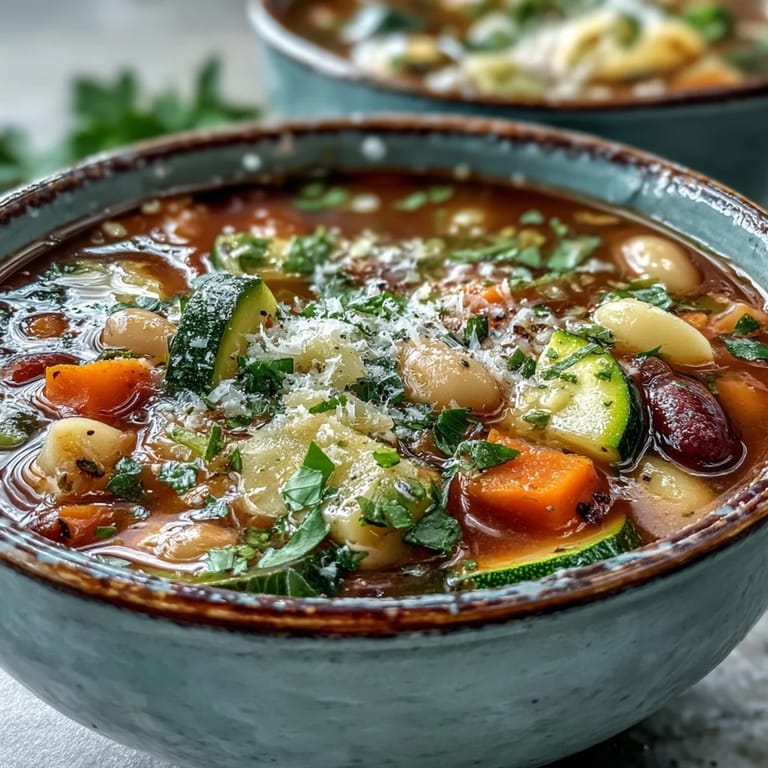
 Minestrone is the kind of soup that asks nothing of you except presence and a willingness to let simple ingredients become something nourishing. Every spoonful carries the quiet comfort of a kitchen well used, a table shared, and the knowledge that you've made something real.
Recipe FAQs
- → What vegetables work best in minestrone?
Traditional minestrone includes carrots, celery, onions, zucchini, potatoes, and green beans. You can easily substitute based on seasonality—try spinach, kale, cabbage, or Swiss chard. The key is using a variety of colorful vegetables for both flavor and nutrition.
- → Can I make minestrone soup in advance?
Absolutely. Minestrone actually tastes better the next day as flavors have time to meld. Store in an airtight container in the refrigerator for up to 4 days. Keep in mind that pasta will continue to absorb liquid, so you may need to add more broth when reheating.
- → Is minestrone soup freezer-friendly?
Yes, but it's best to freeze without the pasta. Cook the soup through step 4, cool completely, then freeze for up to 3 months. When ready to serve, thaw, reheat, and cook fresh pasta directly in the simmering broth for the best texture.
- → How do I make minestrone vegan?
Simply omit the Parmesan cheese garnish or use a plant-based alternative. The soup itself is naturally vegan as it relies on olive oil, vegetables, beans, and herbs for flavor. Some vegan Parmesan options are available, or you can skip it entirely—the soup is delicious without cheese.
- → What type of pasta is best for minestrone?
Small pasta shapes work best because they're easy to scoop with a spoon. Ditalini, elbow macaroni, small shells, or tubetti are traditional choices. If you're gluten-free, any small gluten-free pasta variety works well. Add the pasta during the last 10-12 minutes of cooking to prevent it from becoming mushy.
- → Can I add meat to minestrone?
Certainly. For extra depth of flavor, sauté diced pancetta or bacon with the onions at the beginning. You can also add browned ground Italian sausage or leftover cooked chicken. The meat will complement the vegetables and beans beautifully while making the soup even more substantial.