 Pin it
 There's a moment in every cook's life when mac and cheese stops being just dinner and becomes a ritual. Mine came on a Tuesday evening when my roommate arrived home exhausted, and I realized I had exactly what she needed: butter, flour, cheese, and pasta. Twenty minutes later, watching her face light up as she took that first forkful of creamy, golden comfort told me everything. This isn't fancy cooking, but it's the kind that matters.
I learned the real magic of this dish during a potluck where everything else was still being plated when people were already reaching for my baking dish. It wasn't the fanciest thing there, but it was the first thing empty. That's when I understood: sometimes the simplest food creates the strongest memories.
Ingredients
- Elbow macaroni (250 g): Elbow shapes trap the sauce in their curves, creating those little pockets of cheesy goodness. Cook it just under al dente so it continues softening in the cheese sauce without turning mushy.
- Unsalted butter (2 tbsp): The foundation of your roux and the reason the sauce tastes homemade rather than institutional. Temperature control matters here more than you'd think.
- All-purpose flour (2 tbsp): This isn't just thickener; it's what transforms liquid into silky sauce. Whisk it in properly and you'll never have grainy cheese sauce again.
- Whole milk, warmed (500 ml): Warming it first prevents lumps and speeds up thickening. Cold milk hitting hot roux is how home cooks end up with gritty sauce.
- Sharp cheddar cheese, grated (200 g): Sharp, not mild—it actually stands up to the cooking and reminds your palate that this is about real cheese flavor, not cream.
- Gruyère or mozzarella (50 g, optional): Gruyère adds complexity and a slight nuttiness; mozzarella brings creaminess if your cheddar needs a softening partner.
- Mustard powder (½ tsp): This is the ingredient nobody talks about until they taste the difference. It brightens the cheese without making anything taste like mustard.
- Ground black pepper and salt (¼ tsp and ½ tsp): Taste as you go because oversalting cheese sauce is permanent and regrettable.
- Breadcrumbs, panko preferred (40 g): Panko stays crispier longer than regular breadcrumbs, keeping that golden texture even if the dish sits a few minutes.
- Melted butter and Parmesan for topping (1 tbsp and 2 tbsp): This combination is your ticket to that restaurant-quality golden crust that people remember.
Tired of Takeout? 🥡
Get 10 meals you can make faster than delivery arrives. Seriously.
One email. No spam. Unsubscribe anytime.
Instructions
- Prep your setup:
- Start your oven to 200°C (400°F) if you're baking. Line up your ingredients and warm that milk gently so it's ready to go—cold milk and hot roux create lumps, and lumpy sauce is the universal regret of home cooks.
- Cook the pasta:
- Boil salted water and cook your macaroni about 1–2 minutes under package time so it's still slightly firm. Al dente matters because the cheese sauce will continue softening everything as it cools; overcooked pasta becomes mush.
- Build your roux:
- Melt butter over medium heat, add flour, and whisk constantly for 1–2 minutes until it's smooth and pale, like wet sand. This is where patience pays off—rushing creates lumps, hesitating creates burnt flour.
- Create the sauce:
- Pour that warm milk in slowly while whisking, breaking up any flour lumps as they appear. Once it's combined, keep stirring until the sauce bubbles gently and coats the back of a spoon, usually 3–4 minutes.
- Melt in the cheese:
- Remove from heat and stir in your cheeses until they're completely melted and the sauce is glossy. Add mustard powder, pepper, and salt, tasting as you adjust—you're seasoning for yourself, not a recipe book.
- Combine and choose your path:
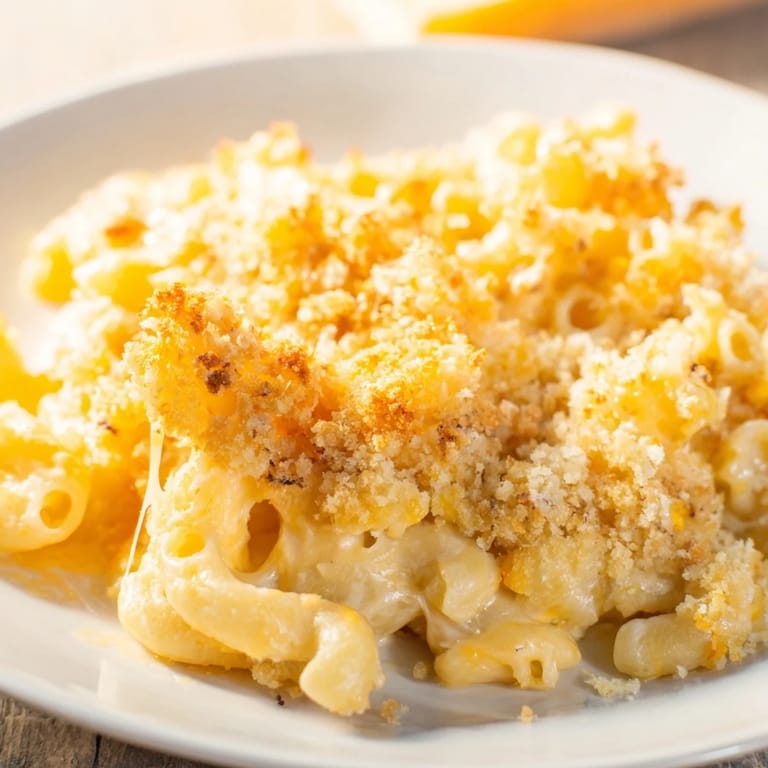
- Fold the drained pasta into the sauce until every noodle is coated. Now decide: serve immediately for creamy comfort, or move to a baking dish for that crispy-topped version.
- Bake, if you choose:
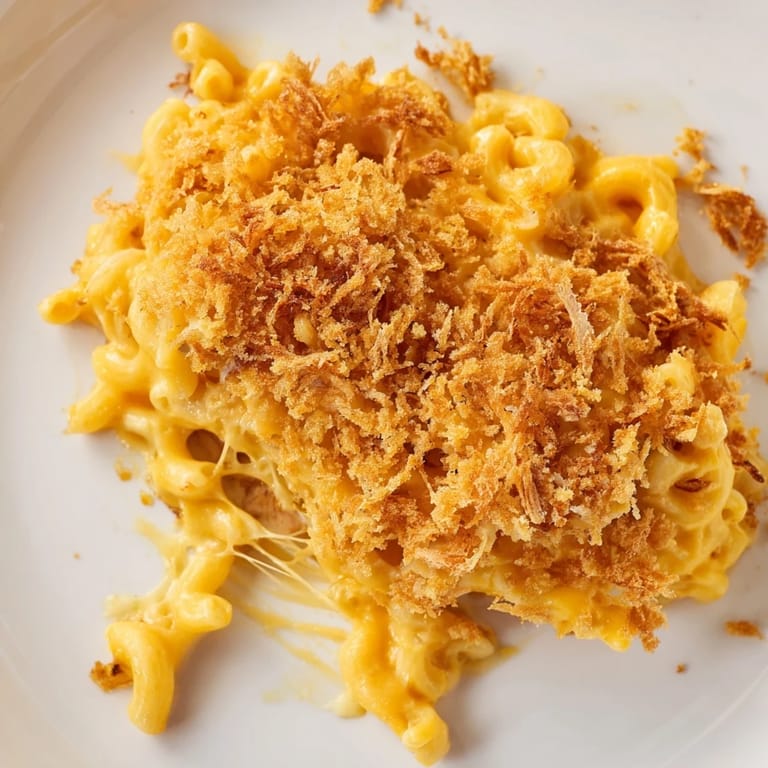
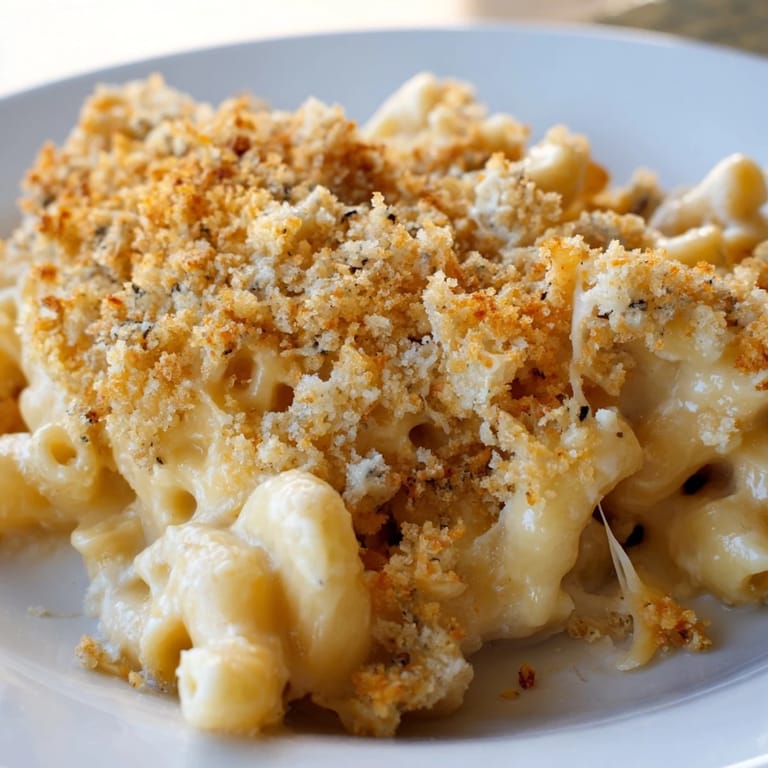
- Toss breadcrumbs with melted butter and Parmesan, sprinkle over the pasta, and bake for 15–20 minutes until golden and crisp. The top should sound slightly crunchy when you tap it with your spoon.
 Pin it
 I realized this dish had become my comfort zone the day a friend asked me to teach them, and I explained the whole thing without looking at notes. It wasn't about perfection; it was about trust—trust that the recipe works, trust that the results will satisfy, trust that sometimes simplicity is exactly what's needed.
The Science of the Sauce
That roux you're making isn't just thickener; it's an emulsion waiting to happen. Flour granules trap liquid, and when you whisk slowly and steadily, you're preventing those granules from clumping. The warmth helps the starch swell evenly, which is why temperature control in those first few minutes determines whether your sauce becomes silky or grainy. Once you understand this, you'll never fear making a cheese sauce again.
Why Your Cheese Choice Matters
Sharp cheddar has enough personality to survive cooking without disappearing into blandness, while softer cheeses like mozzarella or Gruyère bring texture that pure cheddar can't provide alone. I've made this with block cheese I grated myself, and pre-shredded cheese coated with anti-caking agents, and yes, there's a difference. Fresh-grated melts more evenly and creates a smoother sauce because there's nothing preventing the cheese from combining properly with the base.
Making It Your Own
The base recipe is your canvas, not your cage. I've made this with caramelized onions that add a subtle sweetness, crumbled bacon for people who think vegetables are negotiable, and even a pinch of cayenne for someone who wanted heat with their comfort. The sauce is forgiving enough to handle additions as long as you don't overcomplicate the core.
- Add cooked bacon or caramelized onions for depth that makes people ask what your secret ingredient is.
- Substitute half the milk with heavy cream if you want something richer and slightly more luxurious without changing technique.
- A pinch of smoked paprika or cayenne adds complexity without announcing itself loudly.
 Pin it
 This recipe exists because comfort matters, and good food doesn't need to be complicated to deserve your time. Make it tonight and remember that some of the best meals are the ones that make people feel cared for.
Recipe FAQs
- → What type of pasta is best for this dish?
Elbow macaroni is ideal for its shape and texture, holding the creamy sauce well without becoming mushy.
- → Can I use other cheeses besides cheddar?
Yes, cheeses like Gruyère or mozzarella enhance creaminess and depth without overpowering the sharp cheddar flavor.
- → How do I get a crispy topping?
Combine panko breadcrumbs with melted butter and Parmesan cheese, then bake until golden for a crunchy finish.
- → Is it possible to prepare this without baking?
Absolutely, the stovetop method serves it creamy and ready immediately after mixing the pasta and cheese sauce.
- → What variations can I add for extra flavor?
Consider adding cooked bacon, caramelized onions, or a pinch of cayenne pepper to introduce additional taste layers.