 Pin it
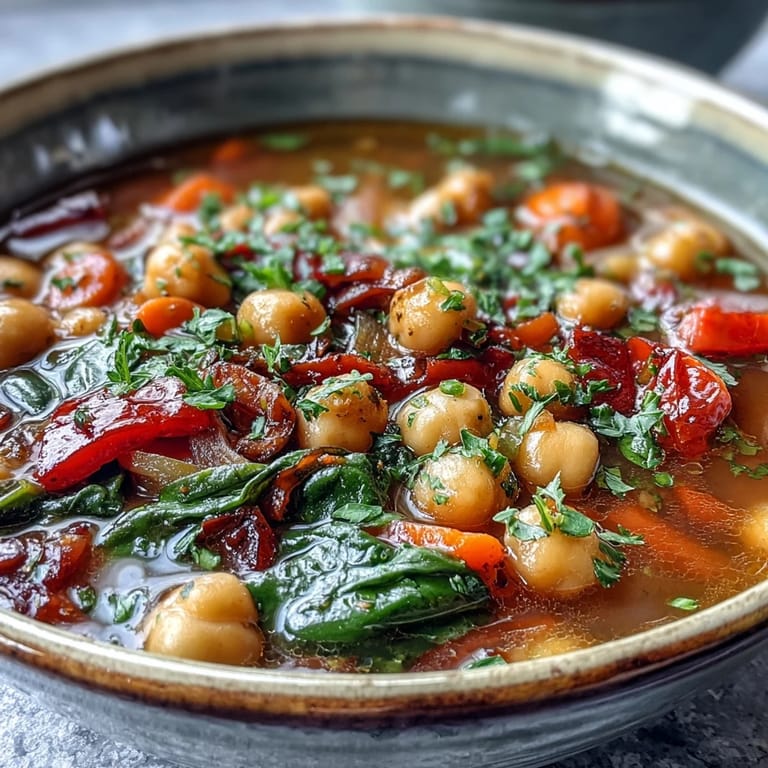
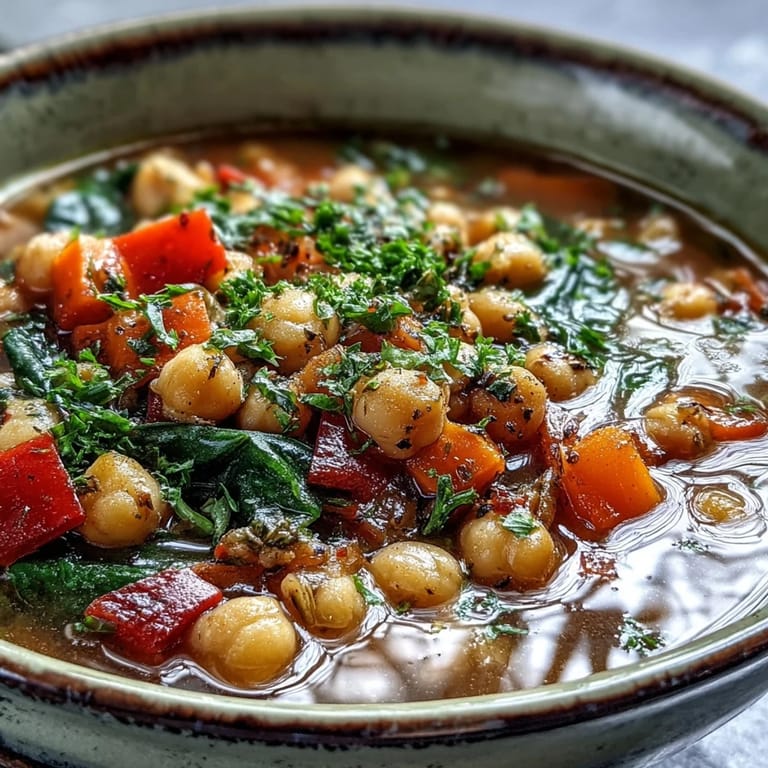
 There's something quietly satisfying about a pot of chickpea stew simmering on the stove—the kind of meal that fills your kitchen with warmth without any fussy techniques or mysterious ingredients. I discovered this particular version during a season when I was trying to eat more mindfully, and what struck me wasn't the health benefits (though those are real) but how genuinely comforting a bowl of this could be on an ordinary Tuesday evening. The spices come together in a way that feels Mediterranean without pretending to be anything fancy, and the chickpeas soften into this creamy texture that makes the whole thing feel substantial and kind.
I made this for a friend who'd just moved to the neighborhood, and I remember her sitting at my kitchen counter while the stew bubbled away, the turmeric and smoked paprika creating this amber-colored steam that made everything smell like home. She asked if it was difficult, and I could honestly say no—just good vegetables, patience, and the kind of cooking that doesn't demand perfection. That's when I realized this recipe works because it's forgiving; it tastes intentional even when you're making it up as you go.
Ingredients
- Cooked chickpeas (2 cups or 1 can, drained and rinsed): These are your protein anchor—canned works beautifully if you rinse them well, which removes excess sodium and any tinny flavor.
- Onion (1 medium, diced): This is your flavor foundation; don't skip the step of letting it turn translucent, as it builds sweetness that balances the spices.
- Garlic (2 cloves, minced): Adds a gentle warmth without overwhelming—fresh is always better than jarred here.
- Carrots (2, peeled and sliced): They add natural sweetness and stay slightly firm even after simmering, giving the stew texture.
- Celery (2 stalks, sliced): This quietly deepens the savory notes; it's the unsung hero of vegetable stews.
- Red bell pepper (1, diced): Brings brightness and a subtle sweetness that plays nicely with the tomatoes.
- Zucchini (1, diced): Added halfway through so it stays tender rather than turning to mush—timing matters here.
- Fresh spinach (1 cup): Wilts in at the end, adding iron and a leafy freshness without cooking away its nutritional value.
- Diced tomatoes (1 can, 400 g): Use fire-roasted if you can find them; they add a depth that plain canned tomatoes sometimes lack.
- Vegetable broth (4 cups): Low-sodium lets the spices shine rather than competing with salt.
- Olive oil (2 tbsp): Good quality matters because you're tasting it directly in the beginning steps.
- Ground cumin (1 tsp): This is your warm spice base; it's comforting without being heavy.
- Smoked paprika (1 tsp): Adds a subtle smokiness that makes people ask what the secret ingredient is.
- Ground turmeric (½ tsp): The anti-inflammatory hero that also gives the stew its golden color.
- Ground coriander (½ tsp): A quieter spice that adds earthiness and complexity.
- Black pepper (½ tsp): Freshly ground if possible; pre-ground loses its brightness over time.
- Salt (¾ tsp, or to taste): Hold back a pinch and taste before serving—you might want more depending on your broth.
- Bay leaf (1): Don't skip this; it ties the flavors together in a way nothing else can.
- Fresh parsley and lemon wedges (optional garnishes): These wake up the stew right before eating, cutting through richness with brightness.
Tired of Takeout? 🥡
Get 10 meals you can make faster than delivery arrives. Seriously.
One email. No spam. Unsubscribe anytime.
Instructions
- Build your flavor base:
- Heat the olive oil in a large pot over medium heat, then add the diced onion and let it cook for about 3 minutes until it turns translucent and softens. You'll notice the smell shift from sharp to sweet—that's when you know it's ready for the next vegetables.
- Add the aromatics and root vegetables:
- Stir in the garlic, carrots, celery, and red bell pepper, cooking for another 5 minutes while stirring occasionally. The kitchen will smell increasingly alive at this point; that's your signal that these vegetables are releasing their essential flavors.
- Toast the spices:
- Add all the dry spices—cumin, smoked paprika, turmeric, coriander, and black pepper—along with the salt, and let them sauté for just 1 minute until fragrant. This step blooms the spices, waking up their full character before the liquid dilutes them.
- Build the stew:
- Pour in the chickpeas, diced tomatoes with their juice, vegetable broth, and the bay leaf, then bring everything to a boil. Once it boils, reduce the heat to low and let it simmer uncovered for 20 minutes, stirring occasionally.
- Add the delicate vegetables:
- Stir in the diced zucchini and cook for another 7 minutes until it's just tender but still holds its shape. Timing this right means the zucchini stays bright and firm rather than turning to soup.
- Finish with spinach:
- Add the fresh spinach and cook for just 2 minutes until it wilts down into the stew, then fish out that bay leaf. Taste the whole thing now and adjust the salt and pepper—this is your moment to make it exactly what you want.
- Serve:
- Ladle the stew into bowls and top with fresh chopped parsley and a squeeze of lemon juice if you like. The lemon brings everything into focus, but it's entirely optional.
 Pin it
  Pin it
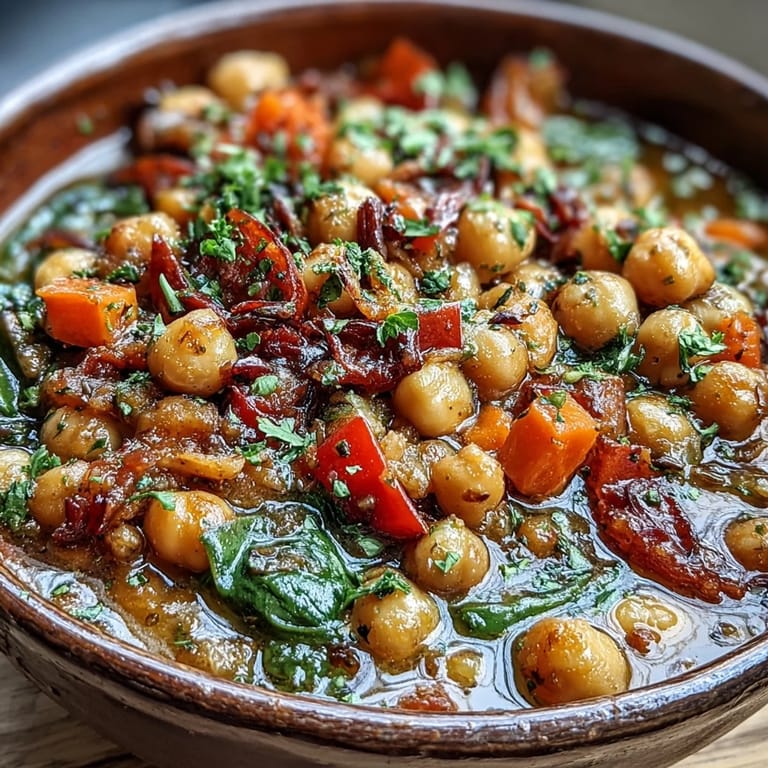
 This stew became something I made regularly not because it was trendy or because I was trying to prove something about my diet, but because it genuinely made me feel good to eat it. There's a difference between food that's good for you and food that feels good when it's inside you—this one manages to be both.
The Spice Story
The first time I made this, I used regular paprika instead of smoked, and the stew tasted... fine, but flat somehow. When I tried it again with smoked paprika, the difference was immediate—a subtle suggestion of something roasted and warm that elevated the whole bowl. That taught me that spices aren't interchangeable; each one brings its own personality to the pot. The turmeric isn't there just for the golden color (though that's beautiful), but for its subtle earthiness and the real anti-inflammatory properties it brings.
Make It Your Own
One of the best things about this stew is how forgiving it is of substitutions and personal preferences. If you don't have zucchini, add diced sweet potato instead—it'll soften beautifully in the time it takes to cook. Kale or Swiss chard work perfectly in place of spinach and add a slightly deeper flavor. Even the spice blend can shift depending on what you have and what you love; a pinch of chili flakes adds heat if your household likes that kind of warmth.
Storage and Serving Ideas
This stew keeps beautifully in the refrigerator for up to 4 days, and it actually tastes better after sitting overnight as the spices continue melding together. You can also freeze it for up to 3 months—just thaw it slowly in the refrigerator and reheat gently on the stovetop. Serve it on its own if you want something light, or ladle it over brown rice, whole grain bread, or even cauliflower rice if you're keeping carbs moderate.
- Fresh lemon juice squeezed over the top right before eating brings the entire bowl into sharp focus.
- A sprinkle of toasted seeds or nuts adds textural contrast if you want something a bit more interesting.
- Pair it with a side salad or roasted vegetables if you want extra volume without changing the core recipe.
 Pin it
  Pin it
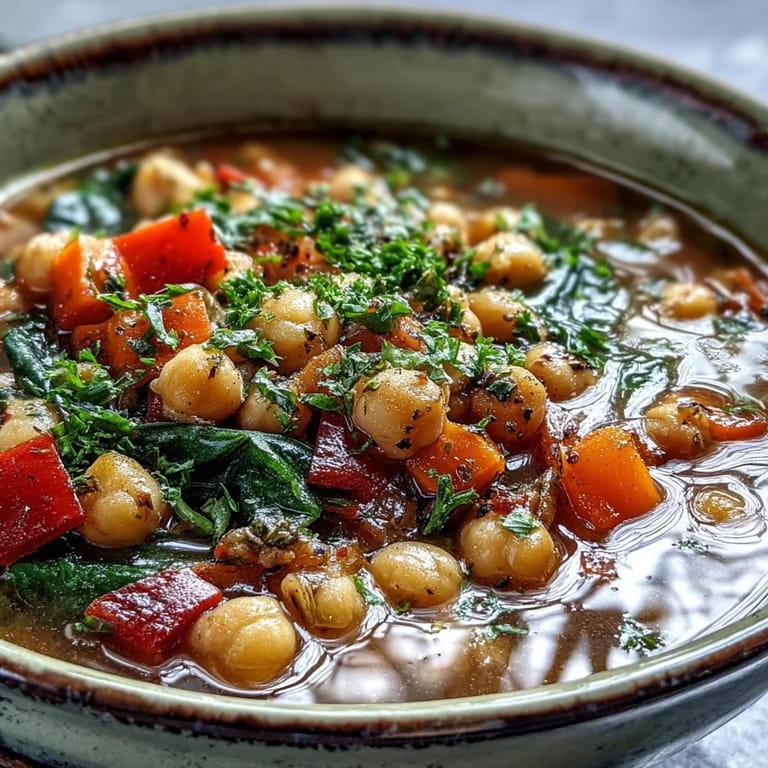
 This is the kind of recipe that gets better the more times you make it, not because you need to fix something, but because you learn what you actually want from a bowl of stew. Make it, eat it, and notice how it makes you feel.
Recipe FAQs
- → Can I use dried chickpeas instead of canned?
Yes, soak 1 cup dried chickpeas overnight, then cook until tender before adding to the stew. This takes about 1-1.5 hours of additional cooking time.
- → How do I store leftover chickpea stew?
Store in an airtight container in the refrigerator for up to 4 days. The flavors develop beautifully overnight. Reheat gently on the stovetop or microwave.
- → Can I freeze this stew?
Absolutely. Freeze in portion-sized containers for up to 3 months. Thaw overnight in the refrigerator and reheat thoroughly before serving.
- → What can I substitute for spinach?
Kale, Swiss chard, or collard greens work wonderfully. Add heartier greens earlier in the cooking process as they require more time to soften.
- → How can I make this stew more protein-rich?
Add an extra cup of chickpeas, stir in cooked lentils, or serve over quinoa. Topping with hemp seeds or nutritional yeast also boosts protein content.
- → What spices can I adjust for different flavor profiles?
Add harissa or cayenne for heat, garam masala for Indian flair, or oregano and thyme for a more herbaceous Mediterranean profile. Adjust to your taste preferences.