 Pin it
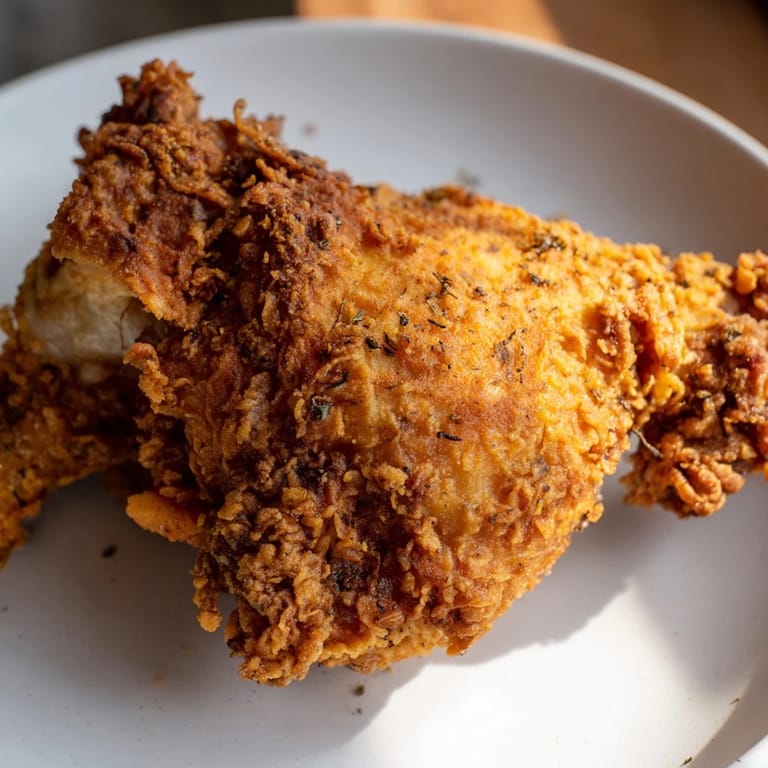
 There's something about the sound of chicken hitting hot oil that takes me straight back to my grandmother's kitchen on lazy Sunday afternoons. She'd stand at the stove with a wooden spoon in one hand and a cigarette tucked behind her ear, completely unfazed by the sizzle and pop. I was maybe ten when she finally let me help, and I watched her pull each piece out golden and crispy, the buttermilk marinade having done something almost magical to the meat inside. That first bite—the contrast between the shatteringly crisp exterior and impossibly juicy flesh—ruined me for every other version I'd ever tried.
I made this for my roommate's birthday potluck once, and I remember the kitchen getting absolutely humid and hot, my hair sticking to my neck, and then someone arrived early and caught me mid-fry with flour all over my face. Somehow that made it better—when everyone bit into a piece and their eyes lit up, it felt earned. There's an honesty to fried chicken that fancy cooking sometimes lacks.
Ingredients
- Chicken pieces (drumsticks, thighs, or assorted): Skin-on pieces are essential—the skin crisps up into something almost cartoonishly delicious, and it keeps the meat underneath from drying out during the deep fry.
- Buttermilk: This is the secret weapon that tenderizes the chicken while the acid breaks down the proteins; if you don't have buttermilk, mix regular milk with a splash of lemon juice or vinegar and let it sit for five minutes.
- All-purpose flour: The foundation of your coating; don't skip the rest step after dredging, it really does help everything stick.
- Garlic powder, onion powder, smoked paprika, dried thyme: These aren't afterthoughts—they build layers of flavor that make you forget you're eating something fried.
- Vegetable oil: Use something neutral with a high smoke point; I've had perfectly good results with canola, but never use olive oil for this.
Tired of Takeout? 🥡
Get 10 meals you can make faster than delivery arrives. Seriously.
One email. No spam. Unsubscribe anytime.
Instructions
- Set up your marinade:
- Whisk together buttermilk with salt, pepper, paprika, and cayenne in a large bowl, then submerge your chicken pieces, making sure everything gets coated. The longer it sits—overnight is ideal—the more tender the meat becomes, but even two hours makes a difference.
- Build your flour coating:
- Mix flour with all the dry seasonings in another bowl; I always give it a little stir to make sure the spices are distributed evenly so no piece gets shortchanged on flavor.
- Dredge with intention:
- Pull each chicken piece from the buttermilk (let the excess drip off), then press it firmly into the seasoned flour, making sure you coat every crevice. This is where patience pays off.
- Let it rest on the rack:
- Arrange your coated chicken on a wire rack for about ten minutes—this helps the coating set and adhere properly during frying, so it doesn't slide off in the oil.
- Heat your oil carefully:
- Use a thermometer and get your oil to exactly 175°C (350°F); too cool and you'll end up with greasy chicken, too hot and the outside burns before the inside cooks through.
- Fry in batches without crowding:
- Working in batches keeps the oil temperature stable and lets each piece fry evenly; turning occasionally helps them brown uniformly and cook through, about twelve to fifteen minutes total.
- Drain and rest:
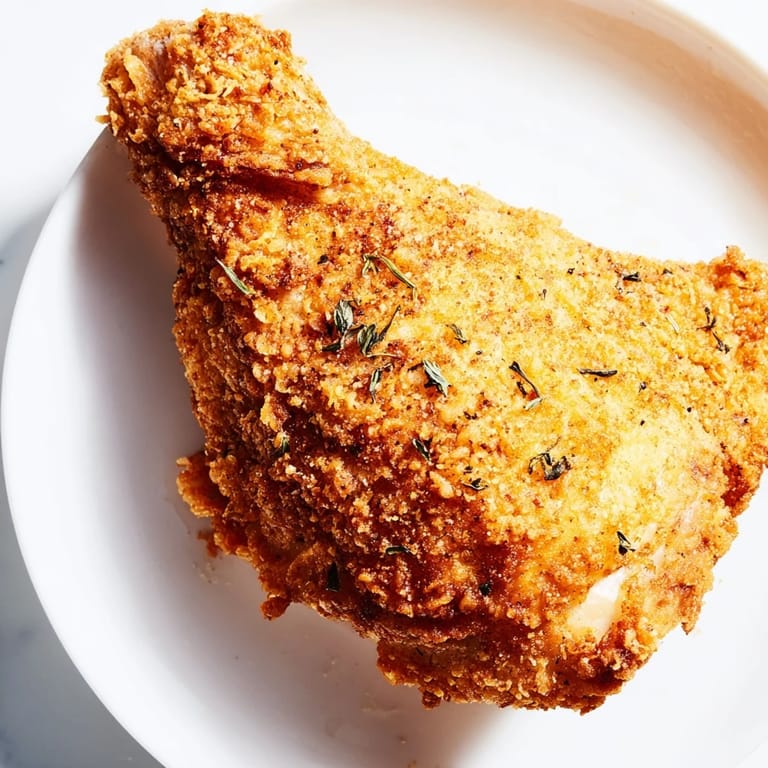
- Transfer to a wire rack (not paper towels, which trap steam and make the bottom soggy) and let sit for five minutes before serving so the exterior stays crispy.
 Pin it
 I think the real moment I understood the power of this dish was when my picky-eating cousin came back for thirds. She didn't say much, just kept reaching for another piece, and I realized that fried chicken operates in this universal language that transcends preference or pretension. It's pure comfort translated into flavor.
The Double-Dip Secret
If you want your chicken to rival anything from a restaurant, try the double-dip technique: after your first flour coating, dip the piece back into the buttermilk one more time, then coat with flour again. The extra layer creates a thicker, almost shatteringly crisp crust that stays crunchy even as the chicken cools. It adds maybe five minutes of work but transforms the texture completely.
Oil Temperature and Safety
This is the unsexy part that actually matters: maintaining your oil at the right temperature determines everything. If it drops below 160°C (320°F), your coating absorbs oil and becomes greasy; if it climbs above 190°C (375°F), the outside crisps before the center cooks. I always keep my thermometer clipped to the pot, and if the temperature dips when I add a batch, I wait a minute or two before adding more chicken.
What to Serve Alongside
Fried chicken doesn't exist in isolation—it needs contrast and balance. Cool, tangy coleslaw cuts through the richness, creamy mashed potatoes soak up hot sauce, and sharp pickles refresh your palate between bites. Some people reach for biscuits, others for white bread, but whatever you choose should feel casual and unpretentious, something you can eat with your hands if you want to.
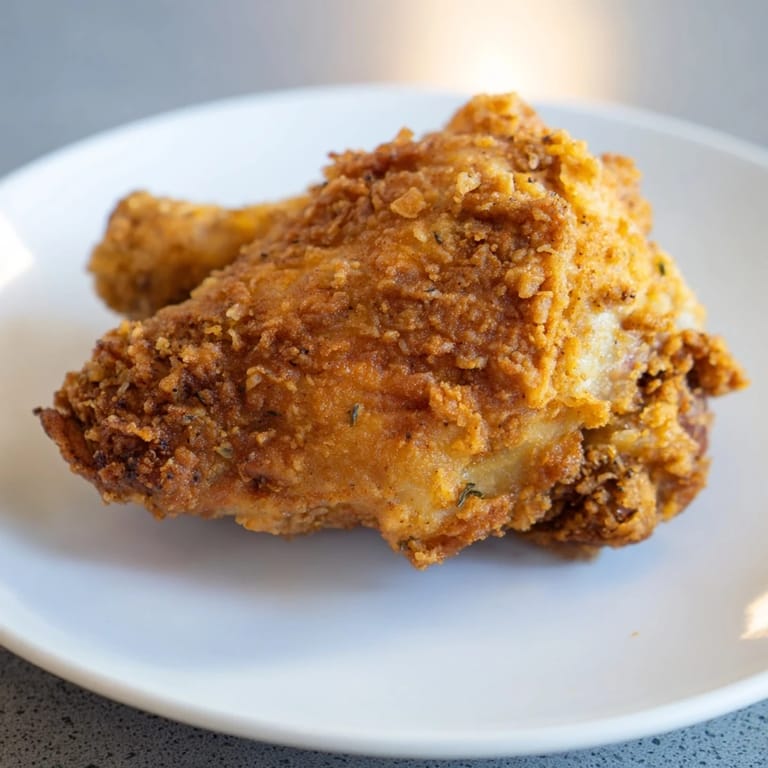
- Serve immediately while the coating is at peak crispiness, or let it rest at room temperature for up to an hour and eat it cold for an entirely different experience.
- Leftover fried chicken actually improves as it cools and the flavors meld—I've caught myself raiding the fridge at midnight more than once.
- If you need to fry ahead for a party, keep finished pieces warm in a 120°C (250°F) oven on a wire rack so they don't get soggy.
 Pin it
 Once you nail this recipe, you'll understand why fried chicken has endured across generations and continents. It's not fancy, but it's everything.
Recipe FAQs
- → How does marinating chicken in buttermilk affect the dish?
Buttermilk tenderizes the chicken by breaking down proteins, resulting in a juicy, flavorful interior while aiding the flour coating’s adherence.
- → What is the purpose of resting coated chicken before frying?
Resting allows the flour coating to set and adhere properly, preventing it from falling off during frying and ensuring a crisp texture.
- → How can I achieve extra crispy fried chicken?
Double-dipping the chicken by applying the flour coating, then buttermilk, and flour again creates a thicker, crunchier crust.
- → What oil temperature is ideal for frying chicken?
Maintaining oil at around 175°C (350°F) ensures even cooking with a golden, crispy exterior and fully cooked interior.
- → Can I substitute boneless chicken pieces in this preparation?
Boneless chicken can be used but requires a shorter frying time to prevent overcooking and maintain juiciness.