 Pin it
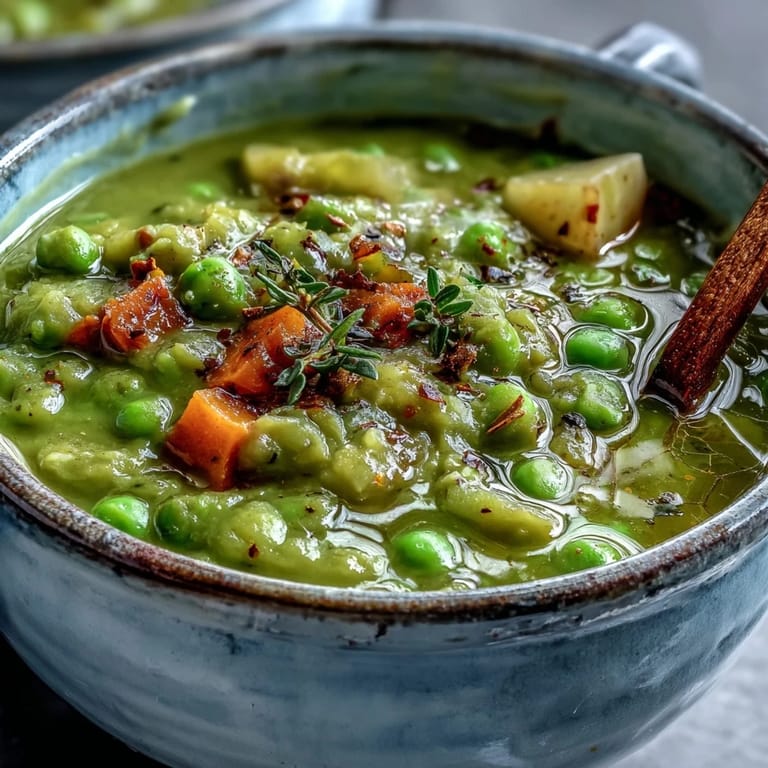
 My grandmother kept a worn index card tucked in her recipe box with nothing but "split pea soup" scrawled across it in fading ink, as if the dish needed no introduction. Years later, I realized that card represented decades of winter afternoons, the kind where steam from a simmering pot fogged the kitchen windows while she kneaded bread dough nearby. There's something about making split pea soup that feels like stepping into those quiet moments, where time moves at the pace of simmering broth and vegetables softening into silk. This version captures that unhurried comfort, loaded with vegetables that disappear into creaminess while keeping their honest flavors intact.
I made this for my neighbor last February when she came home from the hospital, carrying it over in a borrowed Dutch oven that I worried wouldn't make the trip back looking presentable. She'd barely eaten in days, and I remember standing in her kitchen while she took the first spoonful, waiting for her to nod or smile or something. She just closed her eyes and ate three bowls, and I've been making it regularly ever since, less for the recipe and more for what it seems to do.
Ingredients
- 2 cups dried split green peas, rinsed: These little legumes are the backbone here, and rinsing them first prevents that gritty moment where something crunchy surprises you mid-spoonful.
- 1 large onion, diced: The foundation of flavor that sweetens as it softens, creating that savory depth.
- 2 carrots, peeled and diced: They add natural sweetness and body without announcing themselves once cooked.
- 2 celery stalks, diced: The quiet flavor builder that most people never notice but immediately miss if it's forgotten.
- 2 garlic cloves, minced: Just enough to whisper into the background rather than shout.
- 1 medium potato, peeled and diced: This creates the creamy texture naturally as it breaks down, no cream required.
- 1 bay leaf: One leaf, not more, or it becomes bossy and medicinal.
- 1 teaspoon dried thyme: Fresh thyme is lovely in theory, but dried actually performs better here, releasing steadily as the soup simmers.
- 6 cups vegetable broth or chicken broth: The ratio matters; too little and you have stew, too much and you're serving soup that tastes watered down.
- 1 tablespoon olive oil: Just enough to coat the pot and help vegetables release their flavors.
- 1 cup diced smoked ham or 1 ham bone (optional): For those who want that traditional smoky note, though the soup stands beautifully without it.
- 1/2 teaspoon black pepper and salt to taste: Hold back the salt initially since both broth and ham can be surprisingly salty.
Tired of Takeout? 🥡
Get 10 meals you can make faster than delivery arrives. Seriously.
One email. No spam. Unsubscribe anytime.
Instructions
- Soften your aromatics:
- Heat oil in a large pot over medium heat, then add onion, carrots, and celery all at once, letting them share the heat for about five minutes until the onion turns translucent and the air smells alive with possibility. You'll notice the vegetables releasing their moisture, which is exactly what you want.
- Bloom the garlic:
- Stir in minced garlic and give it one full minute—this step is brief but essential, transforming raw garlic bite into something mellow and sweet. The moment you smell it shift from sharp to aromatic, you're ready to move forward.
- Build your soup foundation:
- Add split peas, diced potato, bay leaf, thyme, and broth to the pot, along with ham or ham bone if using. Stir everything together and watch the peas bob to the surface like little swimmers.
- Simmer low and slow:
- Bring everything to a boil, then immediately drop the heat to low, cover partially, and let it bubble gently for about an hour, stirring every fifteen minutes or so to prevent sticking. The peas will soften gradually, the broth will take on color, and the whole kitchen will smell like home.
- Remove solids and adjust texture:
- Fish out the bay leaf and ham bone, then decide how creamy you want things to be. I usually blend about half the soup using an immersion blender right in the pot, leaving some texture, but you can go fully smooth or leave it chunky—there's no wrong move here.
- Taste and season:
- Add salt and pepper in small increments, tasting between additions, since both broth and ham are already salted. Sometimes it needs nothing; sometimes a few grinds make all the difference.
- Serve with warmth:
- Ladle into bowls and deliver while still steaming, ideally with crusty bread nearby for soaking up every last drop.
 Pin it
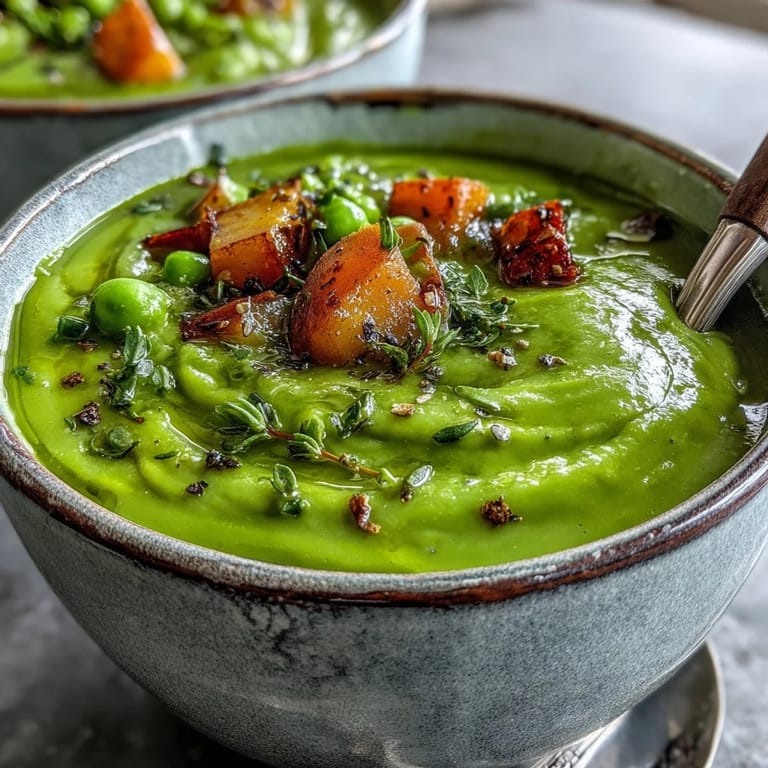
 There's a specific moment in cooking this soup when you realize it's transformed from a loose mixture into something cohesive, something that tastes intentional rather than thrown together. My daughter once described it as "vegetables becoming invisible," which is the most accurate thing anyone's said about how split peas work their quiet magic.
The Vegan Pivot
If you're making this without ham, smoked paprika becomes your secret weapon, adding that depth that traditionally comes from pork. Add about half a teaspoon during the garlic step, and taste your way from there. I've made it both ways at the same table, and honestly, the vegetarian version holds its own—it just whispers instead of announcing itself.
Storing and Reheating
This soup lives beautifully in the refrigerator for up to five days, and it actually tastes deeper the next day after the flavors have settled and played together overnight. Reheating is straightforward—gentle heat on the stovetop with a splash of added broth to loosen it back up, though honestly, I've eaten it cold straight from the container on mornings when I couldn't be bothered with warming.
What Pairs Well Here
Crusty bread is the obvious companion, but a simple green salad with sharp vinaigrette cuts through the richness beautifully if you want something lighter alongside it. If you're thinking wine, dry Riesling or Pinot Noir both work, though honestly, I usually pair this with a cup of tea and the kind of day where nothing else matters.
- Toast your bread with a little butter and rub it with garlic before serving for something that feels slightly more intentional than plain bread.
- A dollop of sour cream or crème fraîche on top adds brightness, especially if you've made a particularly rich version.
- Leftover soup freezes well in containers or even ice cube trays if you want to keep portions manageable for later.
 Pin it
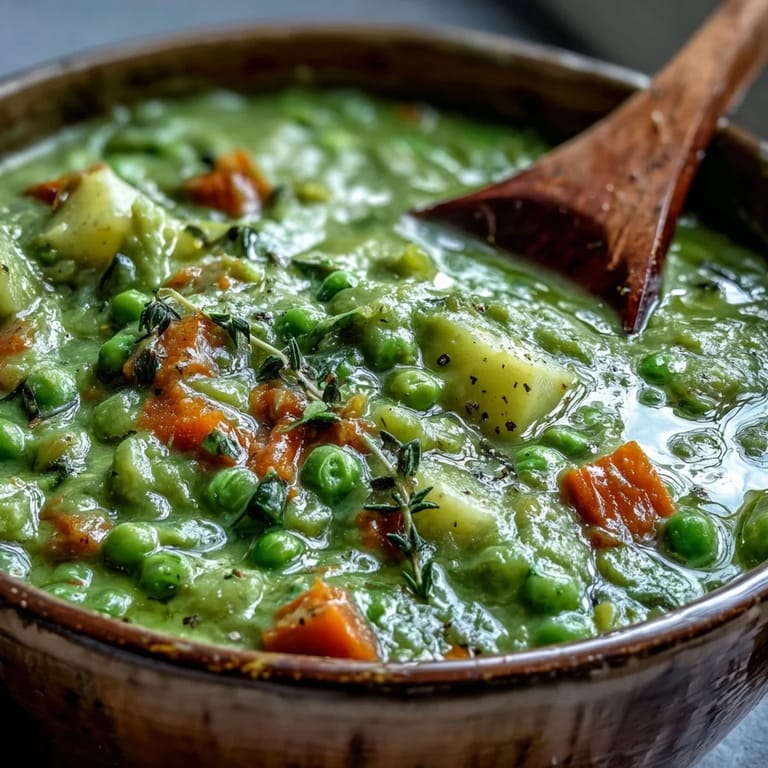
 This soup has this way of making you feel capable and generous at the same time, like you've created something substantial without trying too hard. It's the kind of dish that asks very little but gives back comfort in spades.
Recipe FAQs
- → Do I need to soak split peas before cooking?
No soaking required. Unlike dried beans, split peas cook relatively quickly and will soften during the simmering process.
- → Can I make this vegetarian or vegan?
Absolutely. Use vegetable broth instead of chicken broth and omit the ham. Add smoked paprika to maintain that traditional smoky flavor.
- → Why is my soup too thick?
Split peas naturally break down and thicken the liquid. Simply add water or broth to reach your desired consistency, especially when reheating leftovers.
- → How should I store leftovers?
Cool completely and refrigerate in an airtight container for up to 5 days. The soup continues to thicken as it sits. Freeze for up to 3 months.
- → What's the best way to achieve a creamy texture?
Use an immersion blender to puree half the soup while leaving some chunks for texture, or blend completely in a standard blender for silky smooth results.
- → Can I use yellow split peas instead?
Yes, yellow split peas work perfectly and create a milder, slightly sweeter flavor profile with the same creamy texture.