 Pin it
 My neighbor Sarah brought over a cast-iron skillet one afternoon and asked if I knew how to make cornbread. Turns out, her family had a tradition of serving it alongside chili on Friday nights, and she wanted to recreate that warmth in her new kitchen. I hadn't made cornbread in years, so we decided to figure it out together that day. What started as a casual afternoon became a small ritual—now whenever someone mentions cornbread, I think of her laughter when the first batch came out with an impossibly golden top.
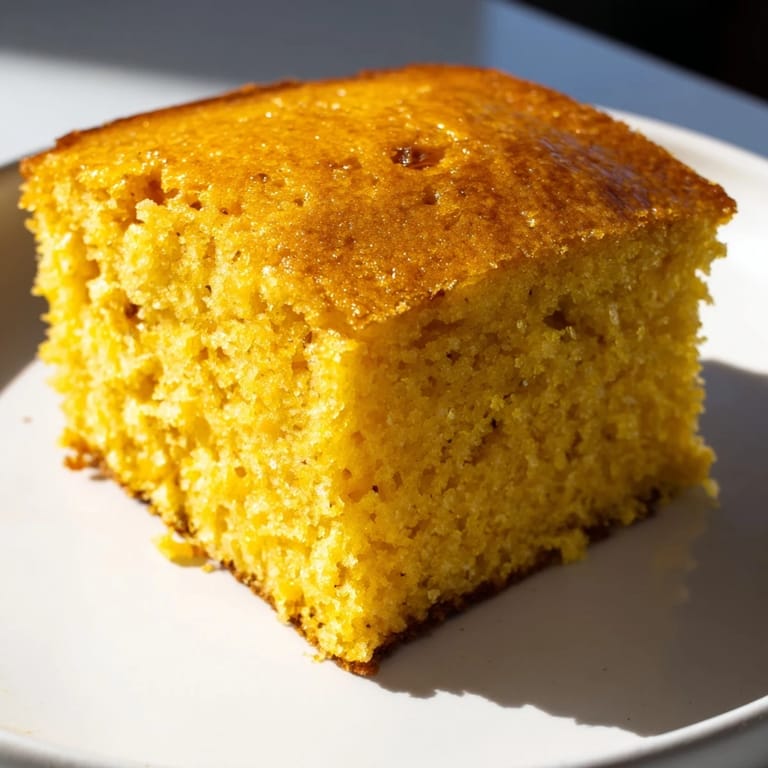
I remember standing in my kitchen on a chilly October evening, the smell of melted butter filling the air as I poured batter into a cast-iron skillet. My roommate was making a big pot of vegetarian chili, and we both knew without saying it that cornbread had to happen. When it emerged from the oven with that perfect golden crust, still warm enough to see the steam rising, we tore into it immediately. That's when I learned the real magic—cornbread isn't just a side dish, it's an anchor that brings a meal together.
Ingredients
- Yellow cornmeal (1 cup): This is your foundation—it gives cornbread its distinctive texture and slightly grainy bite. Don't skip it or substitute with cornflour, which is a completely different product.
- All-purpose flour (1 cup): Balances the cornmeal so the bread stays tender rather than crumbly; it's the glue that holds everything together.
- Granulated sugar (1/4 cup): A gentle sweetness that makes people pause and ask what's in this—adjust downward if you want it more savory, or add honey for depth.
- Baking powder (1 tablespoon) and baking soda (1/2 teaspoon): These two work as your leavening agents; they're what creates that light, tender crumb structure.
- Fine sea salt (3/4 teaspoon): Amplifies all the other flavors without making it taste salty—don't skip this tiny but powerful ingredient.
- Whole milk (1 cup): Use buttermilk if you want a tangier, more complex flavor; regular milk keeps things straightforward and neutral.
- Eggs (2 large): They bind everything together and give the bread structure and moisture.
- Melted butter and vegetable oil (1/4 cup each): The combination of both creates a moist crumb and prevents the bread from drying out; butter adds flavor, oil adds tenderness.
- Honey (2 tablespoons, optional): If you're craving deeper sweetness and richness, this is your secret weapon.
Tired of Takeout? 🥡
Get 10 meals you can make faster than delivery arrives. Seriously.
One email. No spam. Unsubscribe anytime.
Instructions
- Prepare your stage:
- Preheat the oven to 400°F and get your pan or cast-iron skillet buttered and ready. This matters because cornbread bakes quickly, and you want everything lined up before you mix anything wet.
- Combine the dry team:
- In a large bowl, whisk together the cornmeal, flour, sugar, baking powder, baking soda, and salt. You're aerating everything and making sure the leavening agents are evenly distributed so you don't end up with dense spots.
- Mix the wet team separately:
- In another bowl, whisk the milk, eggs, melted butter, oil, and honey until they're fully combined and smooth. Keeping wet and dry separate until the last moment is how you stay in control.
- Bring them together gently:
- Pour the wet mixture into the dry and stir with a spatula just until combined—this is not the time to show off your whisking skills. The moment the last streak of flour disappears, you stop; overmixing develops gluten, which makes cornbread tough rather than tender.
- Into the heat:
- Pour the batter into your waiting pan and smooth the top. Slide it into the oven and listen for the quiet sizzle that tells you something good is happening.
- The golden moment:
- Bake for 20 to 25 minutes until the top is deeply golden and a toothpick inserted in the center comes out clean. If the edges are browning too fast, don't panic—that's just character.
- Rest before serving:
- Let it cool in the pan for 10 minutes. This gives the interior time to set so it doesn't fall apart when you cut it, and it'll still be warm enough to taste perfect.
 Pin it
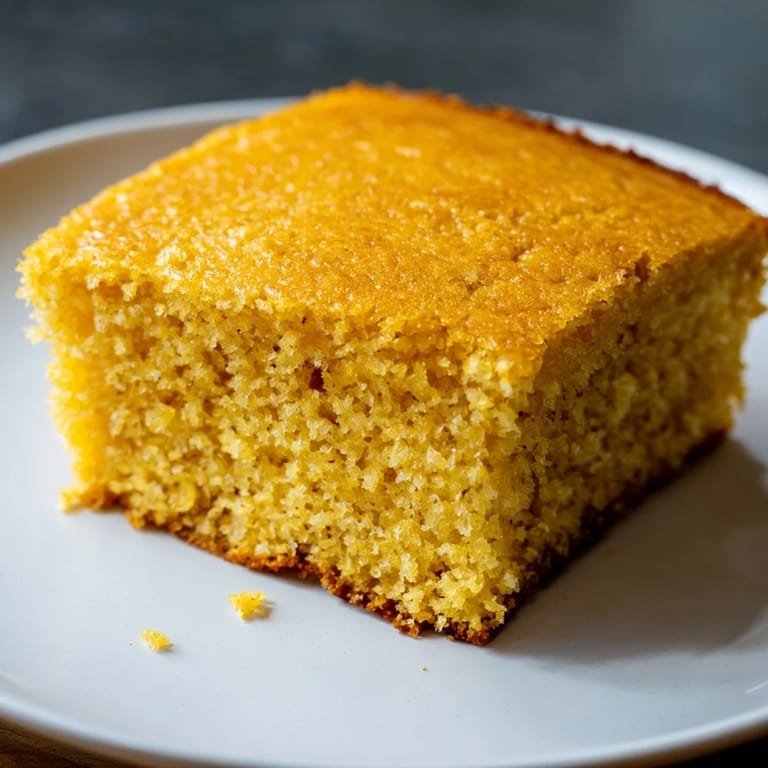
 There was a moment when I pulled a batch out of the oven and my partner walked in right as the butter was still melting into the warm crust. We sat at the kitchen counter in comfortable silence, just eating cornbread straight from the skillet with our hands, and neither of us needed to say anything. That's when cornbread stopped being just bread and became something that held a moment in place.
Variations That Actually Work
The base recipe is beautiful on its own, but it's also a canvas. If you want savory cornbread, stir in a cup of shredded cheddar cheese, half a cup of chopped scallions, or a finely diced jalapeño—add these to the dry ingredients before mixing. I've also stirred in a handful of corn kernels for texture and sweetness, and once I mixed in crispy bacon bits because I had them on hand and couldn't help myself. For gluten-free versions, swap in a one-to-one gluten-free flour blend and watch the result carefully; the baking time might shift slightly depending on your blend.
Serving and Pairing
Cornbread is humble enough to complement almost anything, but it truly shines alongside chili, barbecue, or hearty soups where it can absorb flavors and provide textural contrast. I learned to serve it warm with honey butter melting into the cracks, which is a small detail that somehow makes everything feel intentional. It also keeps for a day or two at room temperature if wrapped loosely, making it perfect for meal prep—though honestly, it rarely lasts that long in most kitchens.
Kitchen Wisdom and Final Thoughts
Cornbread taught me that some of the best recipes are the simplest ones, and that a 35-minute turnaround from ingredients to golden crust is something to celebrate. This is a bread you can master quickly and return to for years without getting tired of it. The fact that it feels both special and effortless is its real magic.
- A cast-iron skillet creates an extraordinary crust because of the even heat distribution, but a regular square pan works just as well and might be easier to handle.
- If your oven runs hot, check for doneness at 20 minutes rather than waiting the full 25.
- Leftover cornbread is secretly perfect crumbled into salads, mixed into casseroles, or honestly just eaten cold with a cup of coffee the next morning.
 Pin it
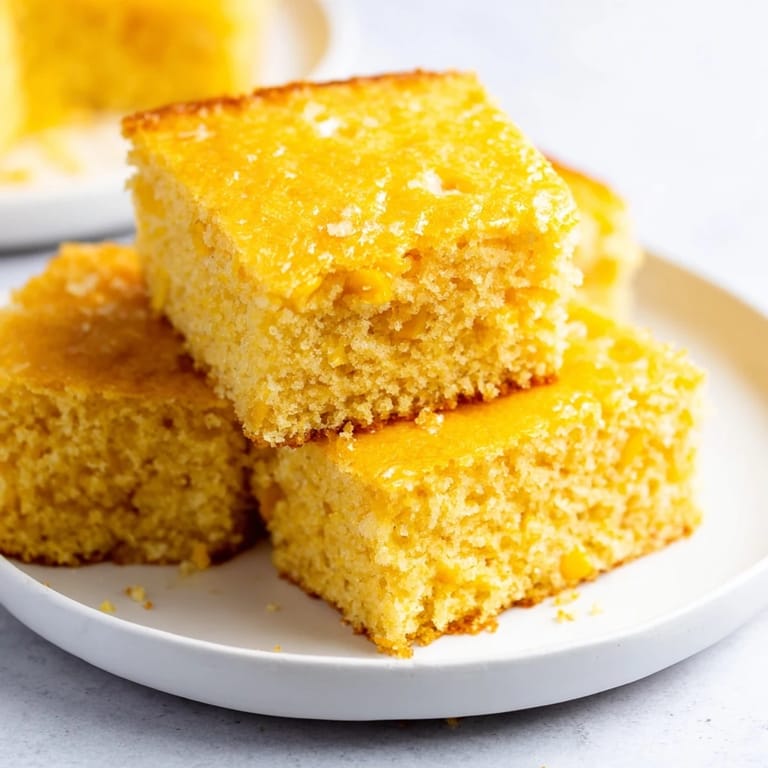
 Cornbread is one of those recipes that reminds us that good cooking doesn't require complicated techniques or exotic ingredients. It's about showing up, mixing with intention, and trusting a 400-degree oven to do what it's meant to do.
Recipe FAQs
- → What type of cornmeal is best for cornbread?
Yellow cornmeal provides a sweet, hearty texture that creates a pleasant crumb and bright color typical of classic cornbread.
- → Can buttermilk be used instead of regular milk?
Yes, using buttermilk adds a tangy flavor and tenderizes the crumb, enhancing the overall taste and texture.
- → How can I make my cornbread more moist?
Adding melted butter and vegetable oil helps retain moisture, ensuring a soft yet golden crust and tender inside.
- → What are some savory additions to enhance flavor?
Incorporate shredded cheddar, chopped scallions, or diced jalapeño for extra savory notes and texture contrast.
- → How do I know when cornbread is fully baked?
The top should be golden brown, and a toothpick inserted in the center should come out clean without wet batter.
- → Can cornbread be made gluten-free?
Yes, substituting all-purpose flour with a gluten-free blend works well without sacrificing texture or flavor.