 Pin it
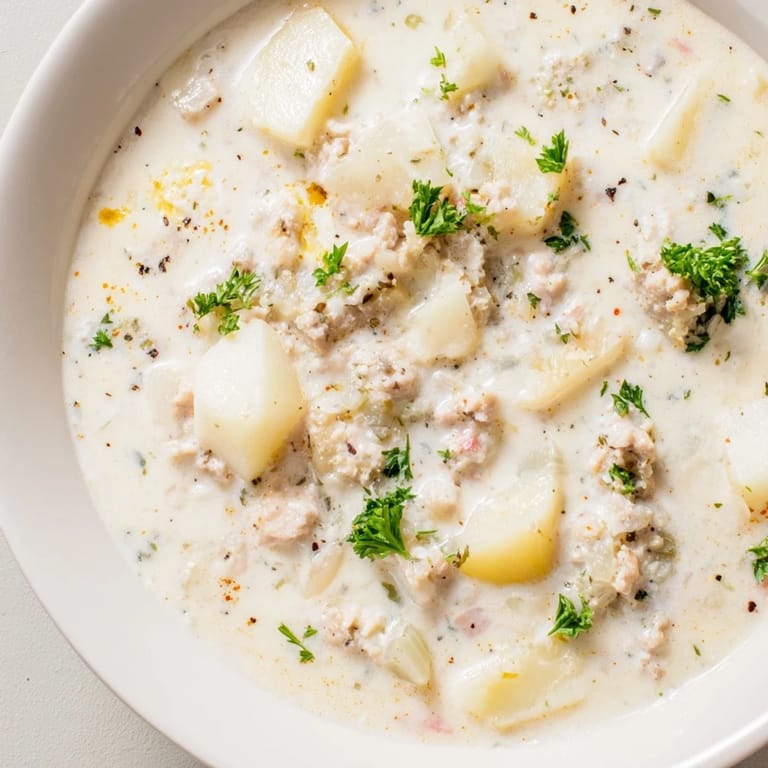
 There's something about the smell of clams steaming open that pulls me right back to a crowded seafood shack on the New England coast, where I watched a weathered cook move through clam chowder prep with the ease of someone who'd made it a thousand times. What struck me wasn't just the richness of the cream or the tender clams, but how every element—the soft potatoes, the silky broth—felt like it belonged in the same spoon. I've since learned that great clam chowder isn't complicated; it's about respecting the clams and building layers of flavor without overthinking it.
I made this for my brother one December evening when he showed up unannounced, half-frozen from a long drive. He sat at the kitchen counter while I worked, steam rising around us, and by the time I ladled the first bowl, he'd already forgiven himself for whatever bad day had prompted the visit. Food can do that—dissolve tension in a way nothing else quite manages.
Ingredients
- Fresh clams or canned clams: Fresh clams release the best juice, but canned ones work beautifully and save you the steaming step; just make sure to save that liquid gold.
- Potatoes: Medium dice them so they cook through without falling apart—you want tender chunks, not potato mush.
- Onion, celery, and carrot: This trio builds the soul of the chowder; the carrot is optional but adds a subtle sweetness that makes people wonder what they're tasting.
- Heavy cream and butter: Don't skimp here—they're what make this feel indulgent, not diet-conscious.
- Clam juice: It's the backbone of the whole thing; bottled works if you're using canned clams, but fresh clam steaming liquid is incomparable.
- Flour: Creates the roux that thickens everything into silky luxury.
- Bay leaf and thyme: Quiet backbone seasonings that let the clam flavor shine without competing.
Tired of Takeout? 🥡
Get 10 meals you can make faster than delivery arrives. Seriously.
One email. No spam. Unsubscribe anytime.
Instructions
- Steam the clams (if using fresh):
- Place them in a pot with 1 cup water, cover, and let medium heat do the work for 5-7 minutes. You'll hear them pop open—that's your signal. Discard any stubborn ones that refuse to open; they're not worth the gamble.
- Build your flavor base:
- Melt butter and let the onion, celery, and carrot soften together. This is when your kitchen starts smelling like something worth coming home to.
- Make the roux:
- Dust the vegetables with flour and stir constantly for 2 minutes. It'll look sandy at first, then gradually turn into a paste—that's exactly what you want.
- Add the liquids slowly:
- Whisk in clam juice, milk, and water gradually to avoid lumps. This is where patience pays off; rushing creates grainy texture instead of smooth cream.
- Simmer with potatoes and seasonings:
- Let everything bubble gently for 15-20 minutes until the potatoes are knife-tender and the broth has turned golden. The bay leaf and thyme do their work quietly in the background.
- Finish with clams and cream:
- Stir in your cooked clams and heavy cream, then let it warm through for 5 minutes without boiling. Boiling breaks the cream's silky texture, so stay gentle here.
- Taste and adjust:
- Remove the bay leaf and taste for salt and pepper. This is your last chance to make it exactly how you want it.
 Pin it
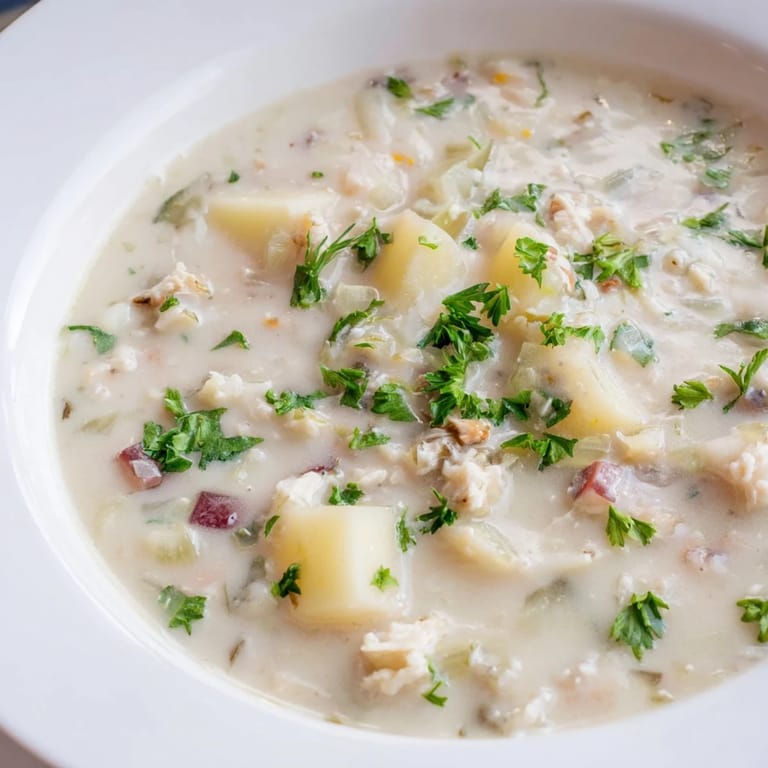
 I'll never forget the moment my grandmother tasted this version—she'd grown up eating clam chowder at every holiday, but she said this one tasted like someone had finally figured out what she'd been craving for sixty years. That's when I realized chowder isn't about showing off; it's about getting the fundamentals right and letting the clams speak.
Fresh vs. Canned: Why Both Matter
Fresh clams are theatrical—you steam them, listen to them pop open, and feel like you're cooking something alive. But canned clams are practical wisdom, especially on weeknights when nobody has time for drama. The secret is respecting what each one offers: fresh clams give you a briny juice that's irreplaceable, while canned ones let you shortcut straight to the creamy part. I've made this soup both ways, and each has earned its place in my kitchen.
The Roux: Your Silent Partner
The roux is where people panic, thinking they need culinary school to pull it off. In reality, you're just cooking butter and flour together for two minutes until it smells nutty, then whisking it into liquid. The constant stirring prevents lumps, and the patience prevents burns. I learned the hard way that rushing this step and trying to add liquid too fast creates soup that tastes grainy instead of creamy.
Making It Your Own
Some of my favorite chowder moments come from people adding their own twist. A friend swaps the heavy cream for half-and-half when she's feeling lighter, and it still tastes honest. Another friend browns bacon first and uses the rendered fat instead of butter—suddenly it's smoky and different, but still recognizably clam chowder. The bones of the recipe are strong enough to handle personalization.
- Bacon makes everything better if you let it render and flavor the base before adding vegetables.
- A touch of paprika or a whisper of Old Bay transforms the flavor profile without overpowering the clams.
- Oyster crackers or crusty bread on the side finish the experience the way it's meant to be finished.
 Pin it
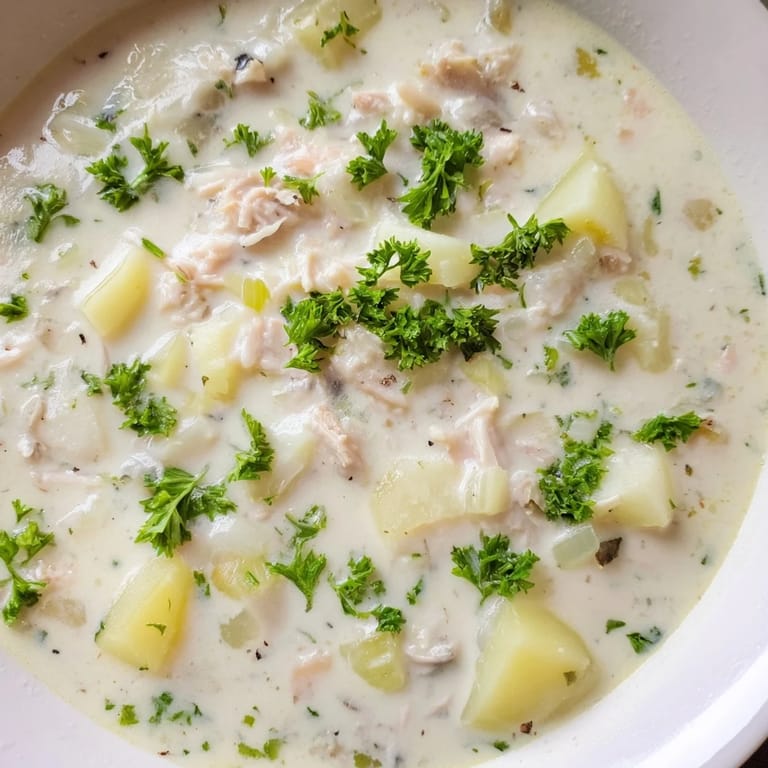
 Clam chowder has a way of stopping conversations and making people pause to really taste what's in front of them. That's all you need to know about whether it's worth making.
Recipe FAQs
- → How should I prepare fresh clams for this dish?
Steam fresh clams over medium heat until they open, then chop and reserve the cooking liquid for added flavor.
- → Can I substitute canned clams in this preparation?
Yes, canned chopped clams can be used along with their juice to maintain a rich broth.
- → What thickening agent is used to achieve creaminess?
A flour-based roux made with butter and flour is used to thicken the broth smoothly.
- → Are there any optional vegetables to enhance the flavor?
Carrots can be added along with celery and onions for extra sweetness and depth.
- → What garnishes complement this classic dish?
Chopped fresh parsley adds color and a fresh herbal note to balance the creamy texture.
- → Can this dish be paired with beverages?
Chardonnay or a crisp lager pairs well, complementing the creamy and seafood flavors.