 Pin it
 There's something about the smell of a pot roast braising in the oven that makes a house feel like home, even if you've only just moved in. I learned to make this dish from my grandmother, who taught me that the secret wasn't in rushing—it was in letting time do the work. She'd brown the meat until it was mahogany dark, deglaze with wine, and then settle it into the oven with the kind of patience that made everything tender and worth waiting for.
I made this for my partner on a cold Sunday when we were too tired to think about dinner but didn't want takeout. By the time it came out of the oven three and a half hours later, we'd watched an entire film, set the table properly, and lit a candle—suddenly it felt like a real occasion. That's the magic of pot roast: it buys you time to turn a regular night into something special.
Ingredients
- Chuck roast (3–4 lbs): This cut has enough marbling to stay moist during the long braise; it gets impossibly tender and rich.
- Kosher salt and black pepper: Don't skip seasoning the meat aggressively before searing—it's what builds the foundation of flavor.
- Olive oil: Use enough to coat the pot; you need it hot enough to create a good brown crust on the beef.
- Yukon Gold or Russet potatoes: Cut them large so they don't dissolve into the gravy; they'll still soften perfectly in the braising liquid.
- Carrots and onions: The onions will almost melt into the sauce, thickening it naturally; the carrots stay firm and sweet.
- Garlic cloves: Smash them rather than mince so you can fish them out later if you prefer, or leave them to dissolve into the sauce.
- Beef broth and red wine: The wine adds depth, but use extra broth if you'd rather skip it—both work beautifully.
- Tomato paste, Worcestershire sauce, thyme, and bay leaves: These are the quiet backbone of the gravy; don't underestimate them.
- Flour or cornstarch: Use whichever you have; cornstarch makes it gluten-free and slightly silkier.
Tired of Takeout? 🥡
Get 10 meals you can make faster than delivery arrives. Seriously.
One email. No spam. Unsubscribe anytime.
Instructions
- Set your oven and dry the meat:
- Preheat to 300°F and pat the roast completely dry with paper towels—this is essential for browning. Season all sides generously with salt and pepper, letting it sit for a minute so the seasoning sticks.
- Sear until golden:
- Heat olive oil in your Dutch oven until it shimmers. Place the roast in and don't move it—let it sit for 4–5 minutes per side until you've got a deep brown crust. This isn't just for looks; it's building flavor.
- Soften the aromatics:
- Remove the roast and add quartered onions and smashed garlic to the pot. Stir for 2–3 minutes, listening for that soft sizzle as they begin to release their sweetness and fill the kitchen with an incredible smell.
- Deglaze and build the base:
- Stir in tomato paste and cook for a minute, then pour in red wine (or more broth) while scraping the bottom of the pot with a wooden spoon. Those browned bits are liquid gold—don't leave them behind.
- Return and layer:
- Nestle the seared roast back into the pot and add beef broth, Worcestershire sauce, thyme, and bay leaves. Arrange potatoes and carrots around it, tucking them into the liquid so they'll cook evenly.
- Braise low and slow:
- Cover with a lid and transfer to the oven. For 3 to 3.5 hours, let the heat and steam work their magic. The roast is done when a fork slides through the meat with almost no resistance.
- Make the gravy:
- Remove the roast and vegetables to a serving platter. Skim fat from the surface, then whisk flour with cold water into a smooth paste and stir it into the braising liquid on the stovetop. Simmer for 3–5 minutes, whisking often, until it thickens into silky gravy.
- Slice and serve:
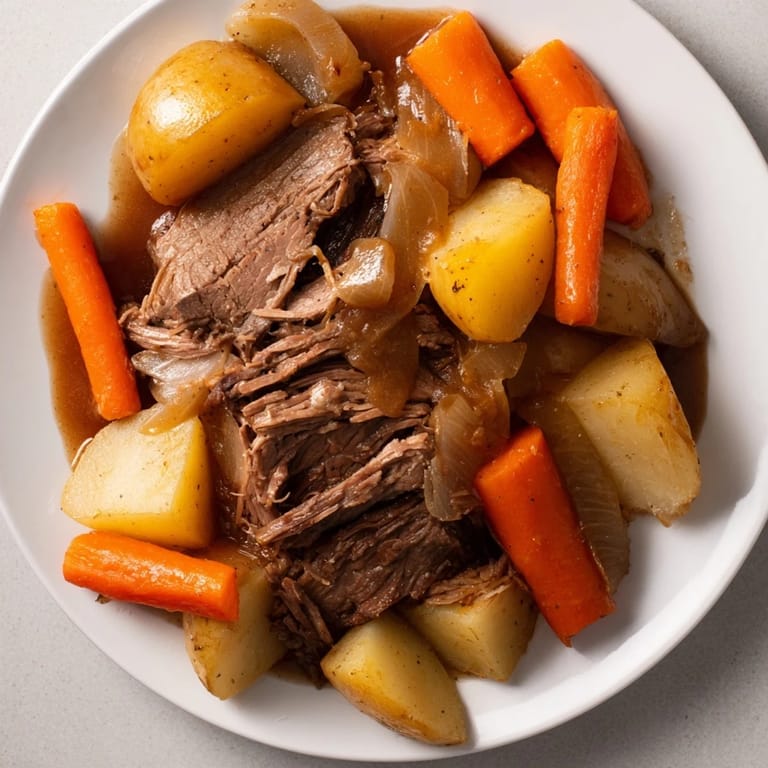
- Slice the beef against the grain, arrange with the vegetables, and pour that rich gravy over everything. Taste and adjust salt if needed.
 Pin it
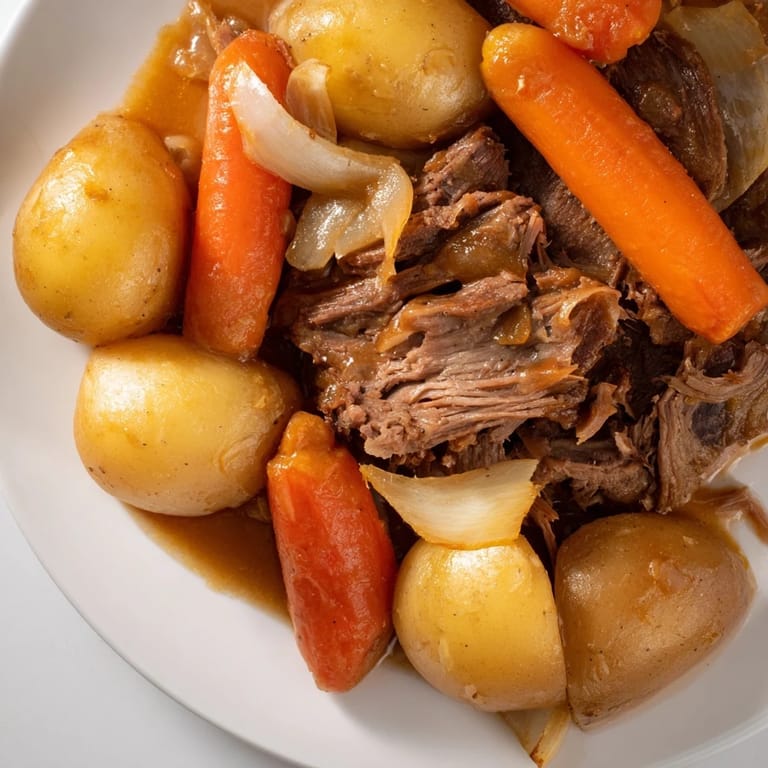
 The first time I served this to friends who'd never had a real pot roast, they went quiet for a moment after the first bite. It wasn't fancy or Instagram-worthy, but it was honest and warm and satisfying in a way that felt like being taken care of. That's when I realized pot roast isn't just food—it's an act of showing up for people.
Timing and Patience
The long braise is actually your friend, not a inconvenience. You're not standing over the stove—you're free to do whatever you want for three and a half hours while the oven does the heavy lifting. I've written emails, baked bread, read books, or simply sat with a cup of tea while my kitchen fills with the most comforting smell. The key is setting a timer so you remember to check it near the end, but mostly you're just waiting.
Making It Your Own
This is a forgiving recipe that welcomes tweaks. Some people add parsnips for earthiness, or celery for a lighter green note. I've seen friends add mushrooms, and it was wonderful. The proportions stay the same; you're just swapping one vegetable for another. The beauty of pot roast is that it works with what you have and what you love.
Serving and Storage
Serve this with crusty bread to soak up the gravy—it's almost as important as the pot roast itself. Leftovers transform into the best sandwiches; just slice the cold beef and pile it on toasted bread with the gravy reheated on the side. It also keeps beautifully in the fridge for up to four days and actually tastes richer after sitting overnight as the flavors continue to meld.
- Pair with a bold red wine like Cabernet Sauvignon if you're drinking—the tannins and the rich meat are made for each other.
- If making ahead, braise it the day before and reheat gently in a low oven before serving.
- Freeze the cooled pot roast in an airtight container for up to three months—thaw overnight and reheat slowly.
 Pin it
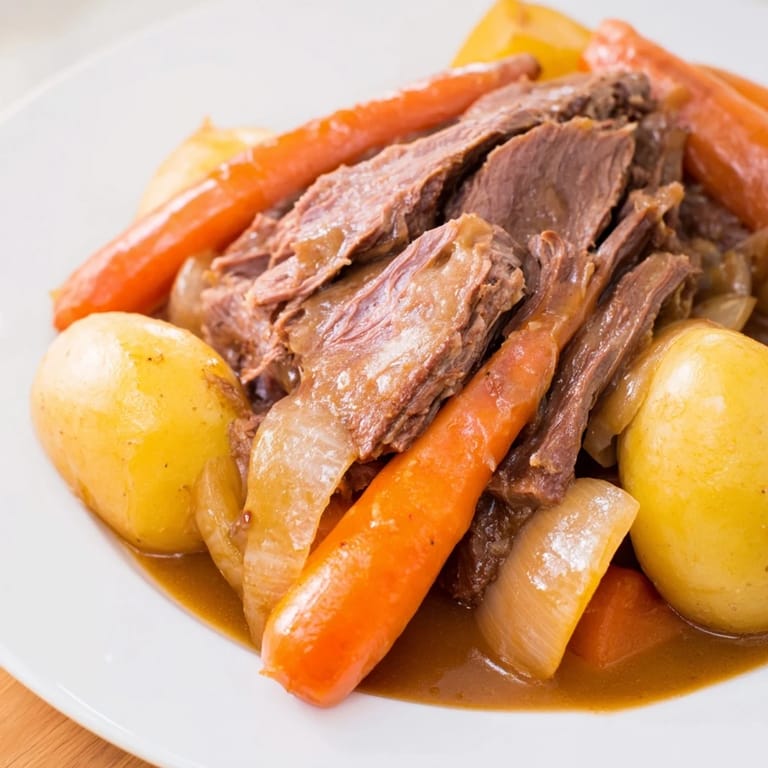
 Pot roast is comfort distilled into a single pot—the kind of dish that proves the best meals don't need to be complicated, just made with care. Make this when you want your home to feel full of warmth, or when someone needs reminding that they're worth the time.
Recipe FAQs
- → What cut of beef works best?
Chuck roast is ideal due to its marbling and connective tissue, which breaks down during slow cooking for tender results.
- → Can I substitute the red wine?
Yes, more beef broth can replace the wine to maintain depth of flavor without alcohol.
- → How do I thicken the gravy?
Whisk flour or cornstarch with cold water and simmer in the cooking liquid until thickened, stirring constantly.
- → What vegetables complement this dish?
Potatoes, carrots, onions, garlic, and optional parsnips or celery all work well to add texture and flavor.
- → Is this dish suitable for gluten-free diets?
Yes, use cornstarch instead of all-purpose flour to thicken the gravy.